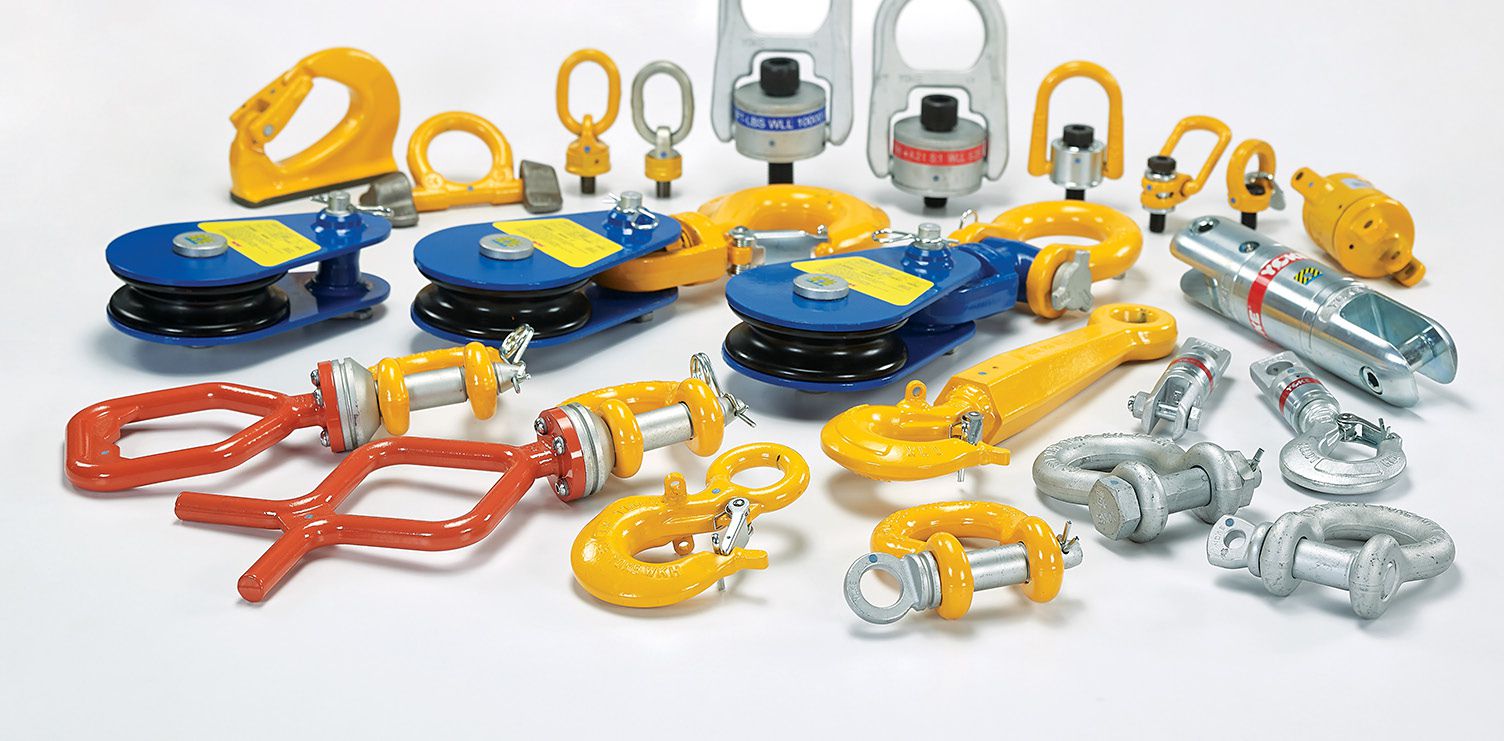
YOKE Industrial Corp.’s complete range of lifting and rigging products are now equipped with Digital Product Passports (DPP), as industry conforms to the European Union’s Ecodesign for Sustainable Products Regulation (ESPR).
YOKE’s catalog includes Grade 80 and Grade 100 lifting chain fittings; swivel hoist hooks; shackles; angular contact swivels; wire rope clips; and lifting points. It integrates radio frequency identification (RFID) chips within every item, allowing end users to utilize a DPP throughout the product lifecycle.
A DPP is a data management tool that records a product’s lifecycle information, including material composition, energy performance, maintenance guidelines, and recycling methods. A DPP promotes compliance and transparency, while improving resource efficiency and supporting circular economy goals. It is less than two years until everyone is expected to be working to the EU Machinery Regulation and the Machinery Directive 2006/42/EC is repealed. One of the most significant changes is the inclusion of original certification and manuals to be supplied digitally with products.
In the meantime, the ESPR aims to significantly improve the sustainability of products placed on the EU market by enhancing their circularity, energy performance, recyclability, and durability. Effective last year, it replaced the Ecodesign Directive 2009/125/EC and established a framework for setting eco-design requirements on specific product groups. It expands the Ecodesign Directive to cover virtually all physical products; and reinforces the range of eco-design requirements that can be set.
NFC RFID chips are opening the door to digital technology for global partners and manufacturers.
YOKE has campaigned for RFID and Software as a Service (SaaS) to be more widely utilized by the lifting industry for many years and remains dedicated to simplifying and digitalizing the processes around compliance and traceability for equipment management.
Steven Hong, president at YOKE, said: “We fully support the ESPR, as these regulations align with the four core principles of the RiConnect Compliance Management System: Compliance, Traceability, Status, and Net Zero [CTSN].”
NFC RFID chips
Today, every user with a mobile phone capable of paying a bill now also has the ability to check a component for identity and safe use. The DPP function doesn’t require an app — only proximity between product and smart device. However, the YOKE app has functions way beyond those related to DPP, such as paperless asset management, compliance documents and pre-use checks.
“The lifting industry is a mature and conservative market, making it difficult to accept new technology,” Hong added. “However, NFC RFID chips are opening the door to digital technology for global partners and manufacturers.”
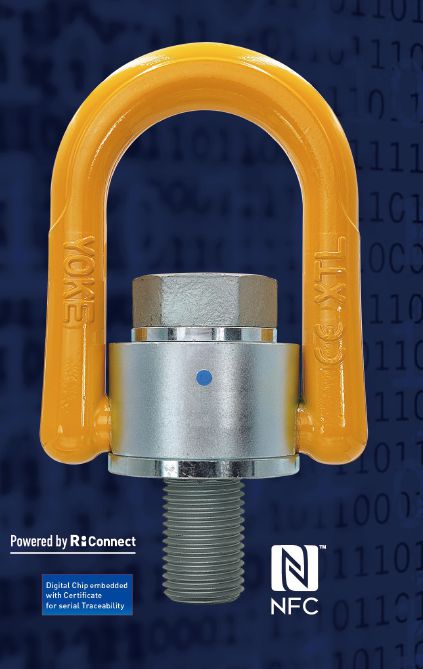
Each YOKE product receives a unique DPP at the point of manufacture, allowing users to access complete product information at any time. The app, meanwhile, provides different modules — such as Manufacturer and Hosting — that offer additional asset compliance management functions. This flexibility allows for comprehensive tracking, monitoring, and enhanced management of assets, ensuring integration of digital protection and regulatory compliance for the entire lifecycle.
SupraNano NFC RFID chips can be pressure-fitted directly into steel or retrofitted to snatch blocks and other products using tags. YOKE’s branded BlueSupra tags are put through a series of tests covering impact and wear, while the SupraNano is subjected to rigorous temperature (-30 to +125 degrees C) and water ingress (6,000m subsea) tests. Further tests are based on the criteria of MIL-STD 810H (U.S. military standard); IP68 waterproof rating; IK10 impact testing; ATEX explosion-proof environmental testing; and CRES corrosion resistance.