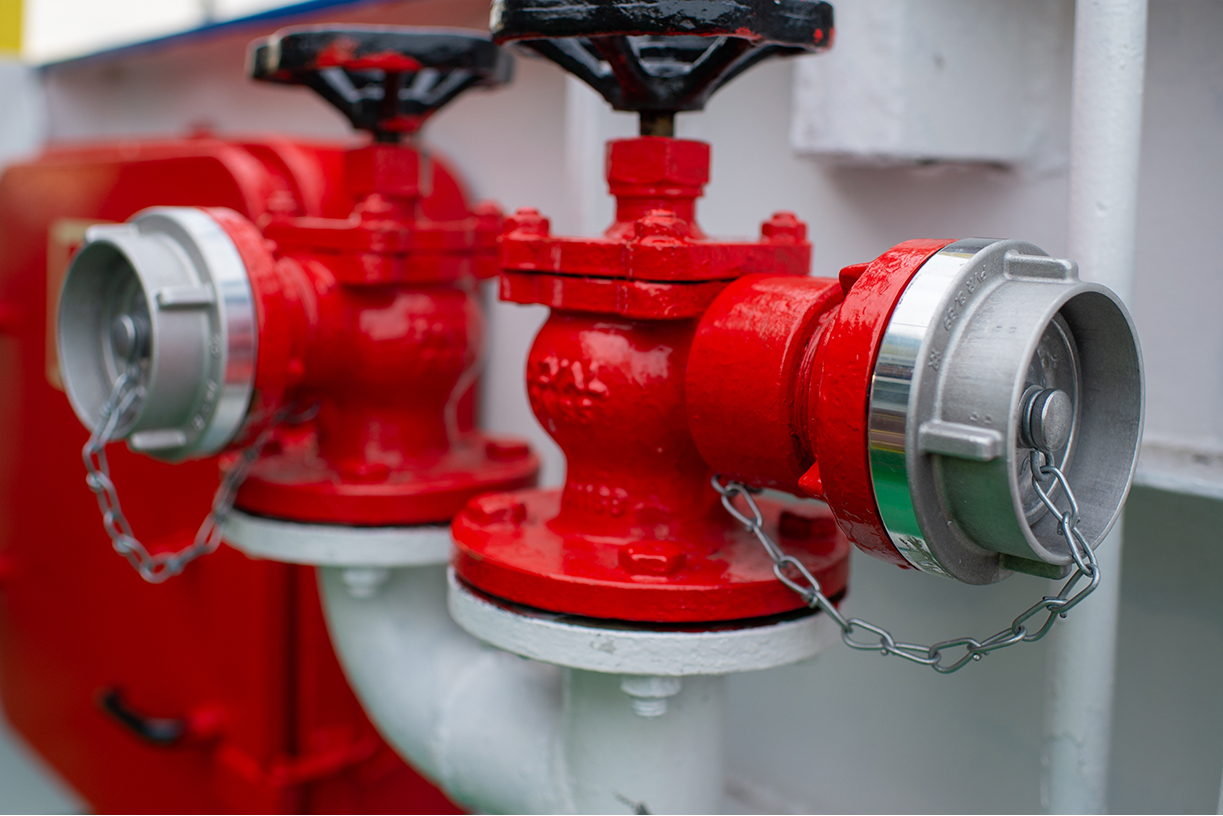
- Portable fire extinguishers of approved type 2A:20-B:C and suitable for the hazards and circumstances should be provided throughout the property and located so an extinguisher is within 50 feet of any point. A minimum of two, 4- A:40-B:C, should be located outside of and within 30 feet of each fuel pump and in clear view in the gas dock area. These fire extinguishers should be placed at least 15 feet apart, if possible. Fire extinguishers should be inspected monthly.
- The gasoline dispensing and other areas where flammable materials are stored or used should be posted as outlined in NFPA 303 (Fire Protection Standards for Marinas and Boatyards) or NFPA 307 (Standard for the Construction and Fire protection of Marine Terminals, Piers and Wharves) as applicable.
- A clearly identified and readily accessible emergency switch that can be used to shut off the supply of power to gasoline pumps should be located on land and near the dispensing pumps should a leak develop.
- At least one Coast Guard approved throw-type flotation device (with at least 60 feet of ¾-inch diameter rope attached or a reach pole) should be located in clear view on the gas dock and every 200 feet on other docks.
- Immediate notification to the nearest fire department in the event of fire should be the established operating procedure. An approved means for sounding an alarm to notify yard personnel and others of a fire on the premises should be provided.
- All fire extinguisher locations should be clearly marked and within easy access. Fire extinguishers should be inspected monthly to ensure they operate properly, when needed.
- Emergency phone numbers should be posted conspicuously near the telephone.
- Combustible waste material and residues should be kept to a minimum, stored in covered metal receptacles, and disposed of daily as specified in NFPA 303.
- National Fire Protection Codes should be consulted for specific details.
- Local fire department personnel should be invited to inspect the facility, at least annually, with special emphasis on access to different areas of the marina in order to fight a fire.
- Marina staff should have firefighting training and drill at least twice a year as specified in NFPA 303.
- A safety skiff should be available and ready for use. The skiff should be equipped with a wire rope and an attached grapple hook. This skiff should be used to tow a vessel that may be on fire to open water and away from other craft or structures.
FIRE PROTECTION
Reading Time: 2 Minutes
2732 Views
Current Issue

Advertisement
Additional Stories

Rebranded Perkins unveils new global strategy to advance sustainable power
Iconic brand is transforming to help customers challenge conventional wisdom and thrive
Hoisting – A Guide to Doing It Safely
Hoisting material is a critical part of all marine construction, from pile
ShibataFenderTeam Equips Terneuzen’s New Lock, Netherlands
The Terneuzen New Lock, replacing the oldest of three locks in Terneuzen,
OZ Lifting relaunches Tele-Pro davit crane
Winona, Minnesota-based OZ Lifting Products LLC has unveiled improvements to its popular
