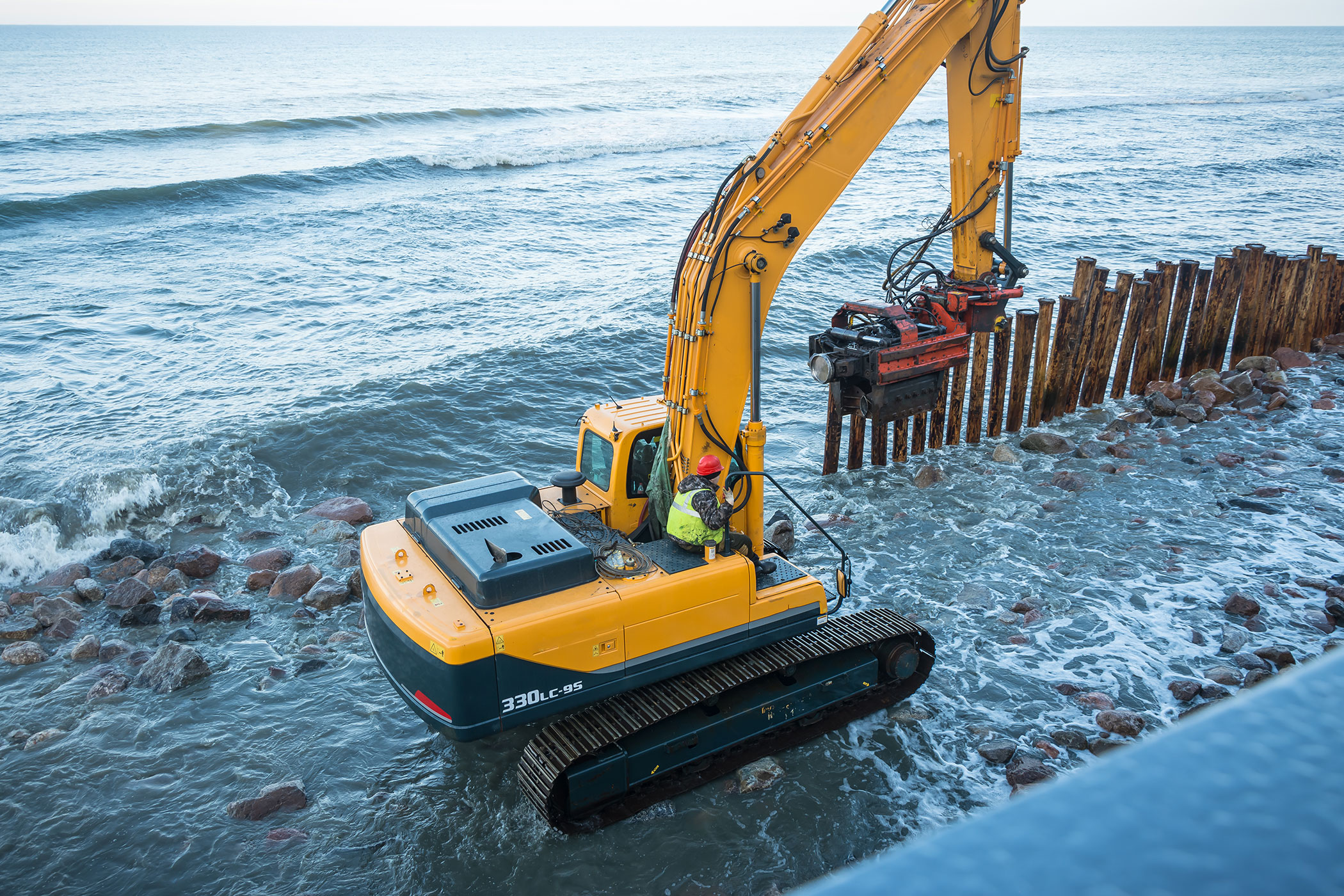
Any and all potential areas in which one plans to lift ANY object or load over water, more specifically ANY “Pile Driving Equipment”… should always be properly risk assessed and appropriate safety measures identified and taken. Following are a few suggestions.
- Develop a formulated “safe system of work”.
- The provision of fall prevention such as safety guardrails, or fall protection devices. Included but not limited to a safety harness or netting if needed.
- Inspect ALL Piling
- Ensuring the work area is free of slip, trip and fall hazards.
- Inspect ALL Pile Driving Equipment including but not limited to…the Pile Hammer, Leads, Power Pack, Head Sheave Assembly, Pile Cap or Jaws
- Appropriate lighting for any potential nighttime work is essential.
- Where there is a foreseeable risk of drowning which is not controllable by other means, suitable personal flotation devices (PFDs) must be provided to, and worn by, all persons involved in such work.
- Rescue equipment including lifebuoys and rescue lines, should at all times be readily accessible.
- The continual monitoring of weather forecasts.
- Provision of a rescue boat, particularly over tidal or fast flowing water.
- Provision of appropriate first-aid arrangements.
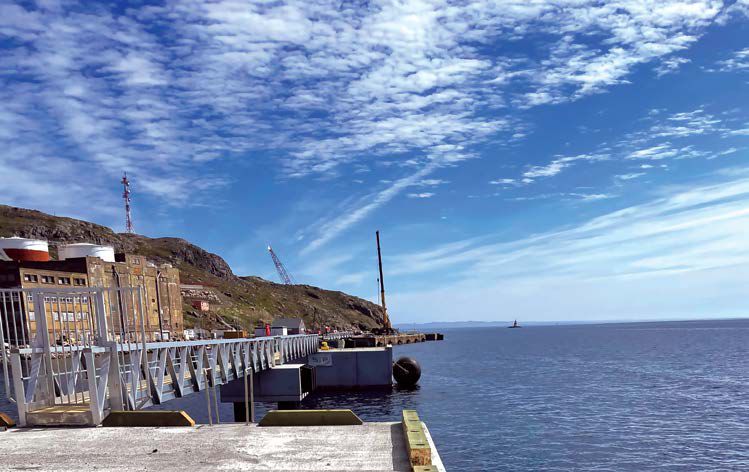
- Suitable lifesaving equipment should be provided at regular intervals along the length of any dock or quay, including suitable lifebuoys and throwing lines.
- Ladders should be provided on any bulkhead, seawall or quay wall.
As a result of the hazardous environment one finds him or herself in when working at a Port Facility moreover working on, over or near water, ALL Port dock cranes, ship loaders and unloaders should be designed and maintained so as to be suitable for the particular application(s) and for the marine environment in which they operate. Standard safety features on such equipment should include:
- Audible and visual alarms, travel alarms and warning horn or device.
- Anemometers to warn crane operator as wind conditions approach the design wind speed operating limits of the crane.
- Anti-collision protection where there is a risk of collision between two rail mounted cranes or where there is a significant risk of the shore crane contacting a ship’s structure.
- Rail mounted cranes should be provided with deflector plates to remove any loose material from the rails.
- Storm anchoring arrangements to ensure safe securing of cranes when out of service, or in advance of forecast high winds.
- Service and storm braking systems on rail mounted cranes capable of controlling crane travel in storm conditions.
- Safe load indicator and/or limiter fitted where appropriate.
- Strength and stability during use must be assured and the Safe Working Load (SWL) must be clearly marked.