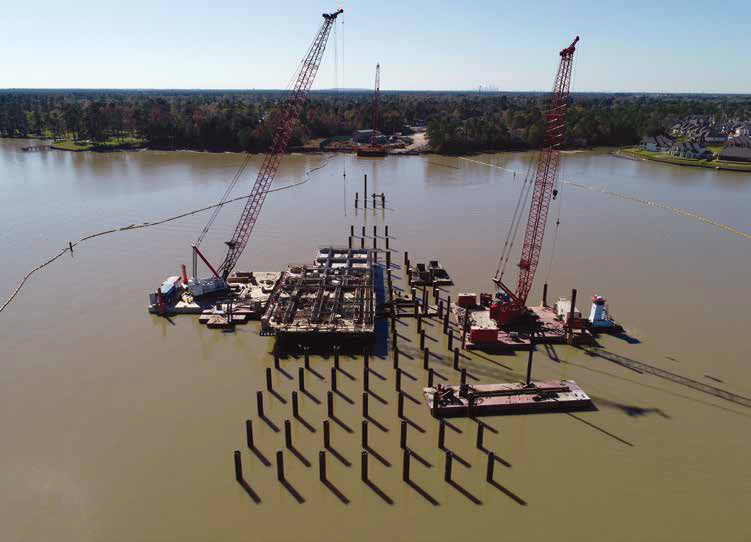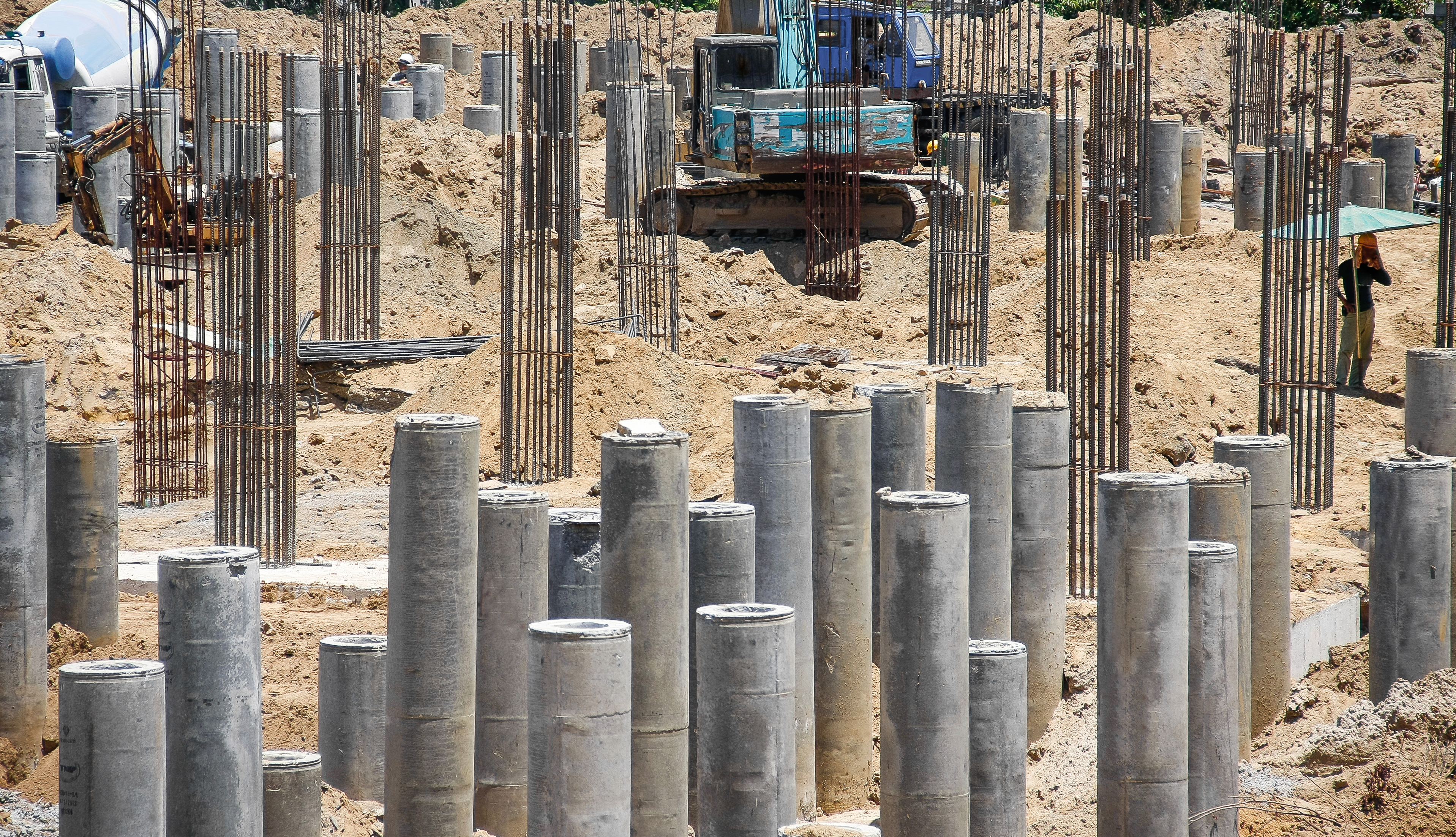
There are 3 driving systems applicable to retaining & bearing piles:
- impact driving
- vibrodriving
- pressing
IMPACT DRIVING
Impact driving is the drop hammer, which uses a falling weight to create the impact, spread to the top of the pile by a driving cap. The most common form of drop hammer in current use is the hydraulic hammer. Historically, air hammers and diesel hammers were used, which utilize an explosive force to drive the hammer, however, as the newer hydraulic hammers operate at significantly higher efficiencies and are far less noisy than older diesel hammers, the latter are now less frequently used.
VIBRODRIVING
An oscillating driver is clamped to the top of the pile, to induce vibrations in the pile and reduce friction along the sides of the pile, thus allowing the pile to be inserted into the ground with little extra application of force.
PRESSING (JACKING)
Pressing methods operate by jacking the piles into the ground, using the adjacent piles for reaction. This is a low noise and low vibration method, which makes it good for sensitive sites. There are two generic types of pressing rig, the ‘Japanese’ rigs, such as those by Giken and Tosa, and panel driving rigs. Units have also been developed to adapt leader rigs to use pressing methods.
The Japanese method uses a rig which progresses along the line of piles without needing to be lifted onto each pile individually by crane, which means that access requirements are reduced. The machines are often specific to a particular generic section size, therefore it is important to match pile section to driving method.
The panel driving/pressing rigs are suited mainly to installation in heavy clays and require a crane to move the rams from pile to pile. With older multi-ram presses it was also necessary to bolt plates to each pile, however recent advances have eliminated this requirement.