The remoteness of the twin ports of Duluth, Minnesota and Superior, Wisconsin – at the western-most point of Lake Superior – belies their importance to the U.S. and world economies.
Combined, they are the largest dry bulk ports in the country and the largest port on all of the Great Lakes. Eighty percent of the liquid steel made in the U.S. comes from taconite (iron ore) mined in northern Minnesota and shipped from Duluth; coal, limestone and other raw materials are shipped from the ports. More than 800 vessels annually dock at the ports, carrying an average of 35 million short tons a year.
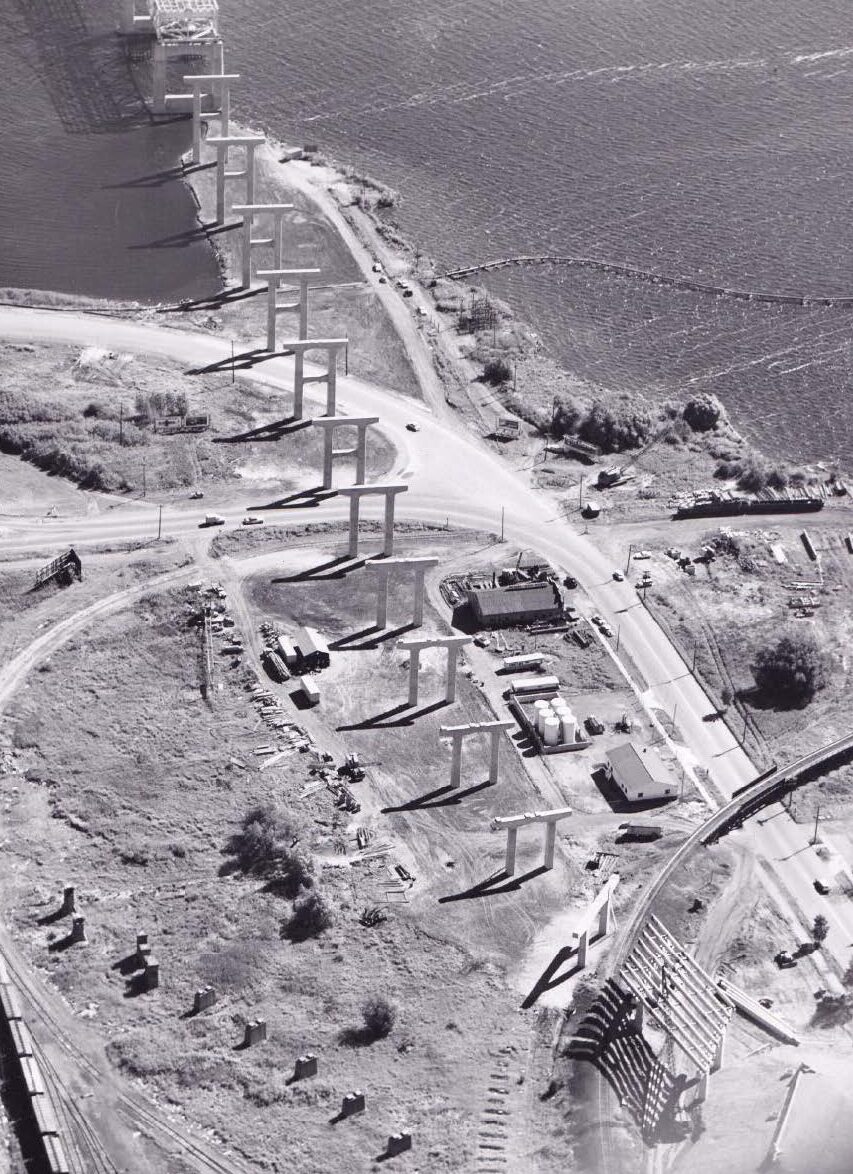
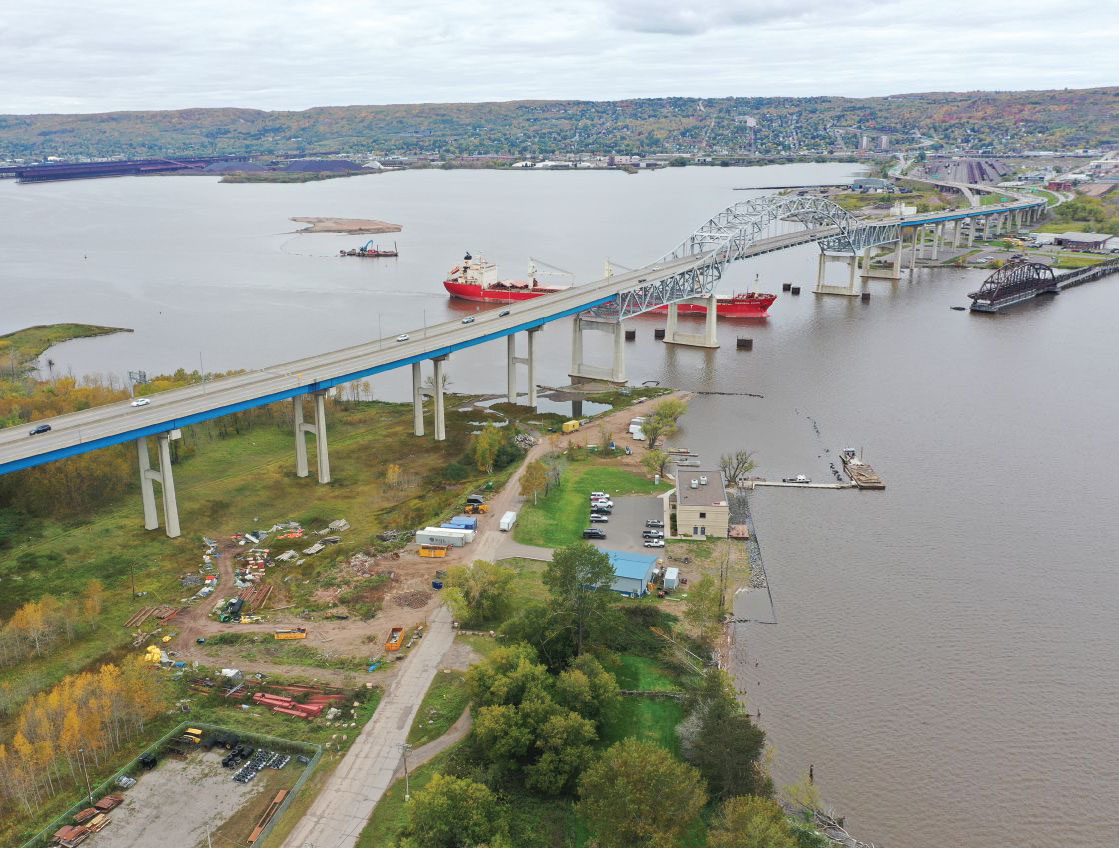
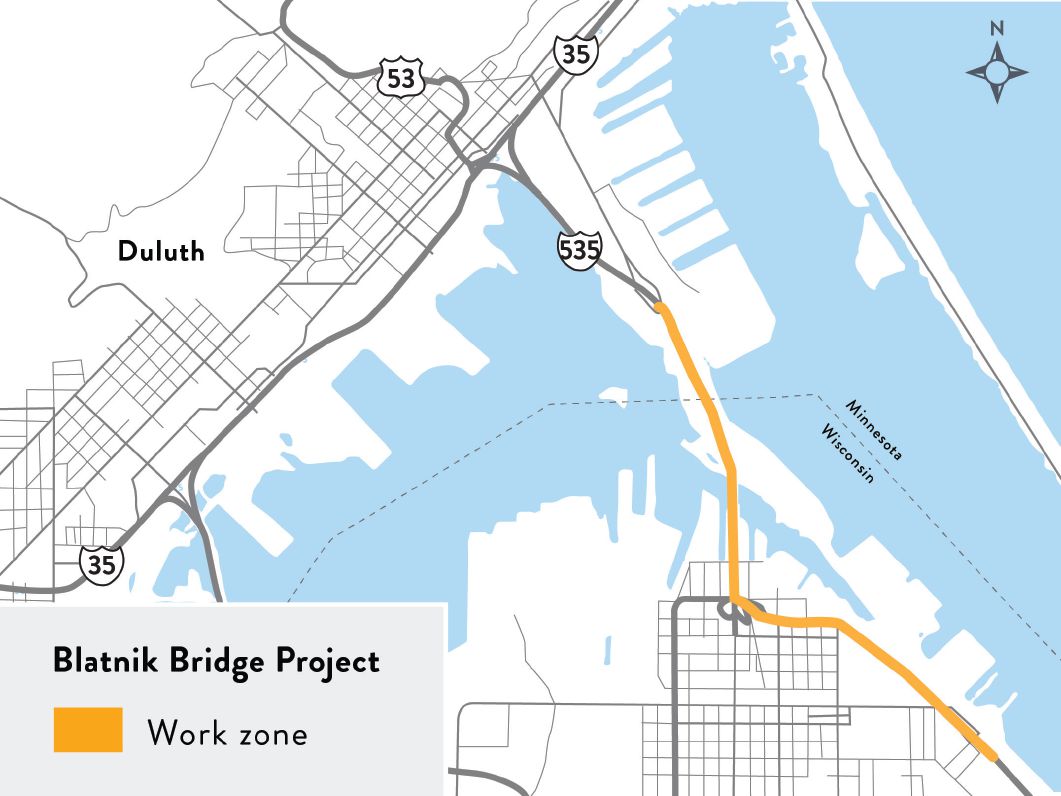
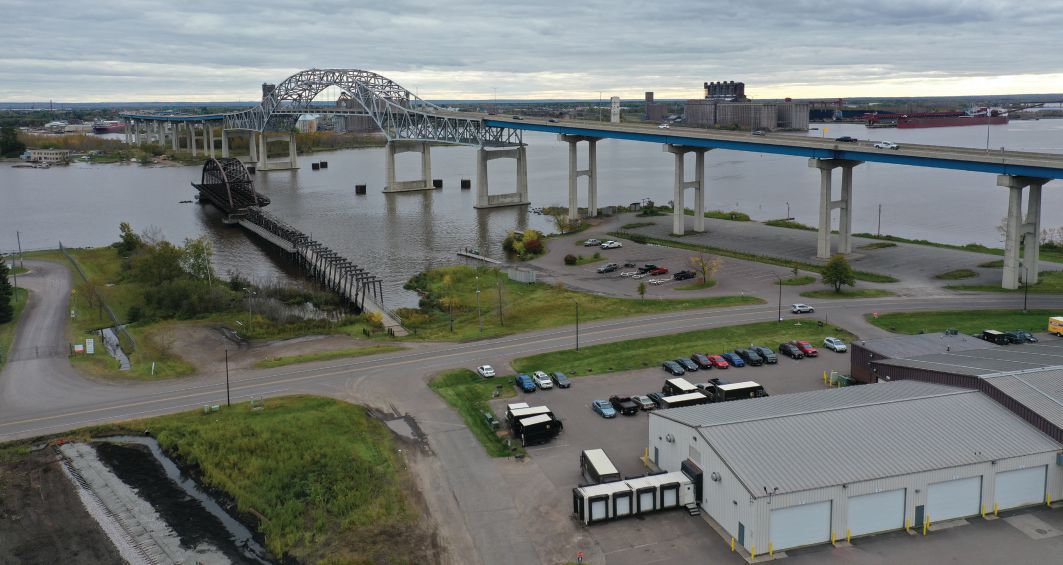
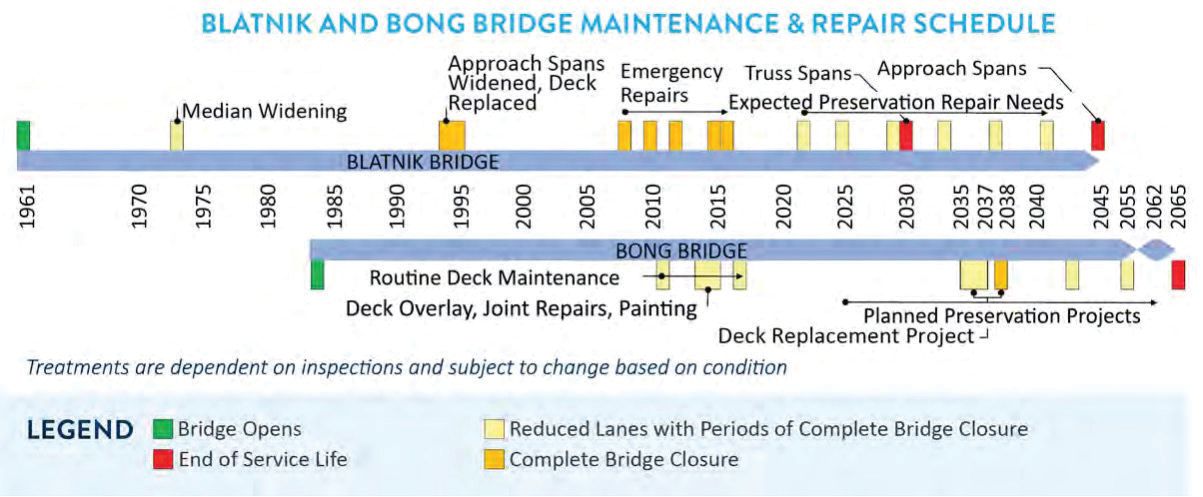
The two bridges over the St Louis River that divides the Duluth/ Superior Harbor harbor off Lake Superior are the John A. Blatnik (pronounced like “blot,” not “flat”) Bridge, which carries I-535 and U.S. Highway 53, and the Richard I. Bong Bridge, which carries U.S. Highway 2. The Bong is the only one of the two that can carry trucks with a gross weight of over 80,000 pounds – in good weather. The Blatnik, jointly owned by the two states, is closer to the port and carries about 33,100 vehicles daily. Built in 1961, its infrastructure has reached its expected lifespan.
Were the two bridges to be out of service at the same time due to maintenance or a natural disaster, trucks would have to travel an extra 125 miles round-trip to cross the rivers, all the way to Hinckley, Minn. and Danbury, Wisc.
The state transportation agencies received $1.058 billion from the IIJA MPDG FY 2023-2024 INFRA grant to jointly replace the Blatnik. (The total cost is estimated at $1.8 billion.)
The time frame to demolish the original 9,000-foot bridge and build a new one that can carry large, loaded trucks requires meticulous planning. “This is a design/build job,” explains Pat Huston, the project director and a veteran of MnDOT, the lead agency of the two-state project. “We’re working on the RFP and design/build books. On the main span, there’s two options we will allow at this time, a tied arch or a cable stay. We want them to put their heads together with their designers and see what they think is most efficient. We’re not telling them what the approach spans need to be.”
There are multiple challenges for the two transportation agencies to manage. One is permitting, always a challenge with agencies of two states that have different rules and rules. “Permitting is really critical,” says Huston. “We’ve had for a couple of years what we call an ‘agency technical working group’ with all the permitting agencies.
This is such a major project for both states that the governors’ offices are engaged in the project. We’ve also formed a two-state project subcabinet with executives from all of our state agencies that touch the project in any way. My counterpart in Wisconsin and I have quarterly meetings with this group to keep them informed on what’s going on, let them know where we’re having challenges and where we may need help. We’re not circumventing any processes; we just can’t afford to wait on anything. Inflation on a job of this magnitude is 70 or 80 million dollars if we miss a year.
“Another challenge is the long duration of the project, probably five years total construction with four years of bridge closures. There are different environmental regulations in each state that we have to work through.”
Weather is a challenge. “We’re just finishing up our fourth year of a major interchange project that touches the Blatnik, the intersection of I-535, I-35 and U.S. Highway 53,” Huston says. “Most of the weather days we’ve lost on this project are due to wind, since cranes have a [safety] threshold. The Blatnik is even windier than the highway interchanges.”
Another challenge, though not a major one, is soil contamination.
“The whole alignment is contaminated from old industry,” he explains. “It could be hydrocarbons, it could be lead, it’s got some of everything. That’s going to take some special handling. In addition to the soil, we’re right next to the water table. If we get into the water, we’ll have to treat that, but we’re going to require perched footings. Rather than digging big holes, dewatering them, putting sheet pile and sealant in and then treating all that water, we’re going to drive pile at existing grade and put the footing on top of the ground and avoid excavation into contaminated material.
“We have structural engineers on the team and ran a pile test program – one H and two rounds, one of them capped – this summer, and I’m not hearing any big challenges to doing that. The engineers got really good results at shallower depths than they thought. That’ll be useful information for the bidding contractors.”
Although the bridge itself will be built on its current footprint, the terminus in Superior, Wisc. will be realigned to avoid terminating an interstate highway on a city street and to remove traffic from the neighborhood. The bridge now empties into a city street in the Howard’s Pocket on the Superior side, a neighborhood that adjoins the Fraser Shipyard, with its two drydocks. A lot of the bridge, which is 9,000 feet long, aside from those two crossings, is pretty traditional construction, according to Huston. The new bridge will directly connect with I-535 and U.S. 53.
The project will kick off this summer, with RFQs and draft RFPs due this summer and the final RFPs due next winter. The contract will be let in the summer of 2026. Major construction will start in the winter/spring of 2027 and last approximately five years.
Huston is confident that level of planning, collaboration and cooperation the two have shown – with each other and with the key federal agencies – will be the key to a successful project.
“The idea behind it is that we work through everything we’re going to do together, rather than sending over a permit application and having it not work out,” he says. “It’s been invaluable – Coast Guard, Corps of Engineers, Minnesota and Wisconsin pollution control agencies. I’ve been telling them since kicked it off, ‘We want to meet everybody’s goals but we don’t have time to back up, so let’s collaborate,’ and that’s been really successful in taking permit risk out of this project.”