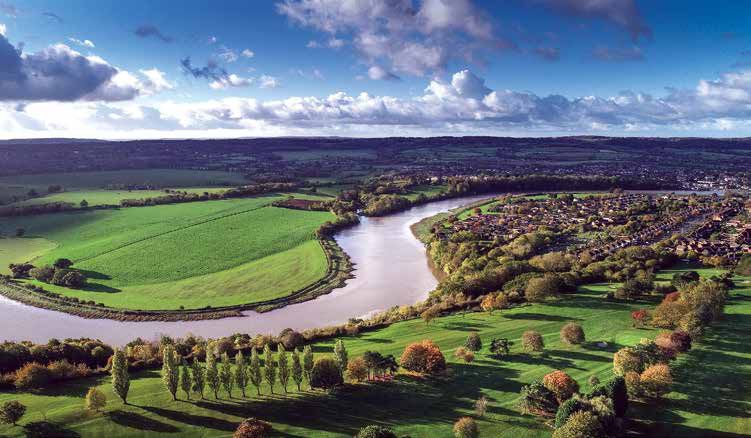
Rainham Marshes, Essex, England, UK
CHALLENGE
Land & Water gained consent for developing a Habitat Creation Scheme on the River Thames at Rainham Marsh, the largest habitat creation project ever constructed inside London’s M25 beltway.
The project will involve creating a significant area of new wetland habitat from re-engineered spoils, coupled with a strategic investment in riverside infrastructure to support along the Thames Corridor for decades to come.
LAND WATER’S SOLUTION
The scheme will see the importation of over six million tonnes of wet and dry spoil material which will form both the basis of a new landform and cover the site to collect rainwater to fuel the wetlands passively. The site sits between Veolia’s landfill site at Rainham and the Royal Society for the Protection of Birds (RSPB)’s Rainham reserve. With the new area creating one million square meters of habitat, more than 5,000 square meters of continuous habitats will be formed providing East London with an oasis of wildlife owned and manager by the RSPB.
Land & Water has ensured easy access to the site from both the river and the A13 main trunk road which means that material can now be transported by both marine craft and truck.
Rainham Silt Lagoons is on the north bank of the River Thames at Coldharbour Lane, Rainham.
THE RESULTS
- 3.5 million cubic meters of void immediately available for non-hazardous dredgings and restoration soils;
- Habitat creation scheme;
- Direct river access;
- Consented environmental permit.
Rainham Marshes Nature Reserve
Rainham Marshes is a nature reserve owned and managed by the Royal Society for the Protection of Birds (RSPB) in the east of London, adjacent to the Thames Estuary in Purfleet, Thurrock and the London borough of Havering.
In 2000, the area of land was bought from the UK Ministry of Defence, which used it as a test firing range. With no activity for several years, the nature reserve was officially opened to the public in 2006. It has maintained much of its medieval landscape, and is the largest area of wetland on the upper parts of the Thames Estuary.

The reserve is home to a diverse range of bird species, wetland plants and insects. It also has one of the densest water vole populations in the country.
The site is home to an environmentally friendly visitor center which features solar panels, rainwater harvesting, natural light and ventilation and a ground heat exchange system.
The site is part of a Site of Special Scientific Interest (SSSI) called Inner Thames Marshes. The part which is in the London Borough of Havering has been designated by the council as a Site of Metropolitan Importance for Nature Conservation.
The marshes to the west of the nature reserve have been used as a landfill site for rubbish from London and the local area. Rainham Landfill is operated by Veolia ES Landfill Limited.

Rainham Marshes Nature Reserve

Rainham Marshes is a nature reserve owned and managed by the Royal Society for the Protection of Birds (RSPB) in the east of London, adjacent to the Thames Estuary in Purfleet, Thurrock and the London borough of Havering.
In 2000, the area of land was bought from the UK Ministry of Defence, which used it as a test firing range. With no activity for several years, the nature reserve was officially opened to the public in 2006. It has maintained much of its medieval landscape, and is the largest area of wetland on the upper parts of the Thames Estuary.
The reserve is home to a diverse range of bird species, wetland plants and insects. It also has one of the densest water vole populations in the country.
The site is home to an environmentally friendly visitor center which features solar panels, rainwater harvesting, natural light and ventilation and a ground heat exchange system.
The site is part of a Site of Special Scientific Interest (SSSI) called Inner Thames Marshes. The part which is in the London Borough of Havering has been designated by the council as a Site of Metropolitan Importance for Nature Conservation.
The marshes to the west of the nature reserve have been used as a landfill site for rubbish from London and the local area. Rainham Landfill is operated by Veolia ES Landfill Limited.