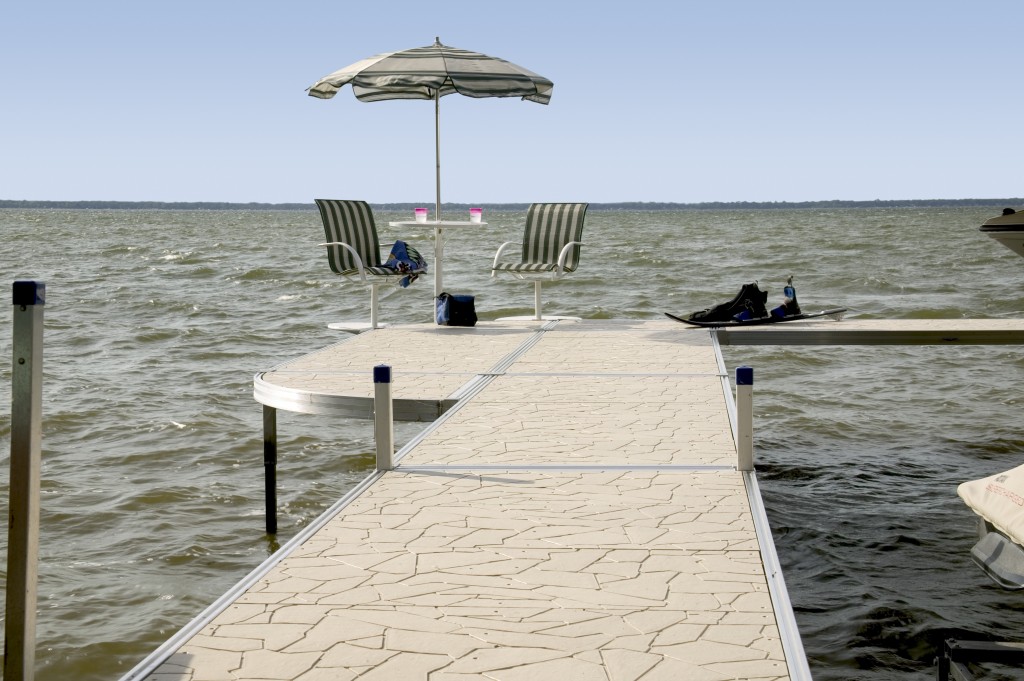
Composite materials are another great decking option for docks. Composite decking is usually chosen as a lower maintenance alternative to wood decking. One advantage that composite decking has over wood is that it never needs to be sanded, stained, or refinished. Composite decking is not necessarily maintenance free, however, and because many types of composite decking actually contain some wood fibers, it is important to keep them clean. Mold or mildew can grow in damp or shady areas of the decking which will then begin to show signs of decay if not cleaned regularly.
It is important to note that some people may also lump plastic decking into the composite decking category. However, unlike composite decking, which is usually made out of a combination of wood fibers and plastic, true plastic decking is generally composed of 100% recycled and / or virgin plastic. Plastic decking eliminates the potential for decay caused by mold or mildew, but can sometimes be prone to cracking. In general though, composite or plastic decking is a great upgrade from wood when it comes to low-maintenance and long term durability for your dock application and where the feel of real wood decking is not important.
The Difference between Composite Decking and Plastic Decking
Plastic decking or composite decking can both be a fantastic, low-maintenance choice as decking for a dock system.
Composite decking often includes recycled inorganic materials like polyethylene or polypropylene combined with organic materials such as wood fibers. The inorganic plastics, and the organic wood fibers (or other materials) are bonded together using adhesives and other additives to form the deck boards.
Plastic decking contains no organic materials. This type of decking is typically made out of polypropylene, polyethylene, polyvinyl chloride, or some combination of the three. The deck boards can be injection molded, rotationally molded or extruded. Typically the boards are lighter than composite boards, and they can sometimes have a shinier appearance than composites.
Both types of decking will weather better, and require less maintenance than natural woods. Special attention should be paid to composite decking that is manufactured with organic materials as they can be slightly more susceptible to decay caused by mold, fungi, or mildew than plastic decking.