AN OSHA SAFETY GUIDE
Employers are responsible for providing a safe and healthy workplace for their employees. OSHA’s role is to assure the safety and health of America’s working men and women by setting and enforcing standards; providing training, outreach and education; establishing partnerships; and encouraging continual improvement in workplace safety and health.
This informational booklet provides a general overview of a particular topic related to OSHA standards. It does not alter or determine compliance responsibilities in OSHA standards or the Occupational Safety and Health Act of 1970.
Because interpretations and enforcement policy may change over time, you should consult current OSHA administrative interpretations and decisions by the Occupational Safety and Health Review Commission and the courts for additional guidance on OSHA compliance requirements Employers are responsible for providing a safe and healthy workplace for their employees.
OSHA’s role is to assure the safety and health of America’s working men and women by setting and enforcing standards; providing training, outreach and education; establishing partnerships; and encouraging continual improvement in workplace safety and health.
This informational booklet provides a general overview of a particular topic related to OSHA standards. It does not alter or determine compliance responsibilities in OSHA standards or the Occupational Safety and Health Act of 1970.
Because interpretations and enforcement policy may change over time, you should consult current OSHA administrative interpretations and decisions by the Occupational Safety and Health Review Commission and the courts for additional guidance on OSHA compliance requirements.
Hazards related to the use of machinery and equipment can result in injuries to hands, feet, or limbs that become caught in moving machinery; head and other injuries from being struck by falling objects or moving equipment; and burns.
Other potential hazards include getting pinned under a load; falling off equipment; and electric shock.
To reduce hazards from machinery and equipment:
- Inspect all equipment before use;
- Maintain equipment properly. Shut down and lockout the power source before repairing mechanical systems. Make repairs according to the manufacturer’s guidelines;
- Ensure that the person using the equipment is trained in its proper use and maintenance.
- Install appropriate rails, temporary or permanent, to avoid equipment being driven off the barge or dock.
- Ensure retaining pins are properly installed and positively secured with a keeper or locking device.
- Emergency shut-offs must be easily accessible, and sufficient guarding should be used for equipment controls.
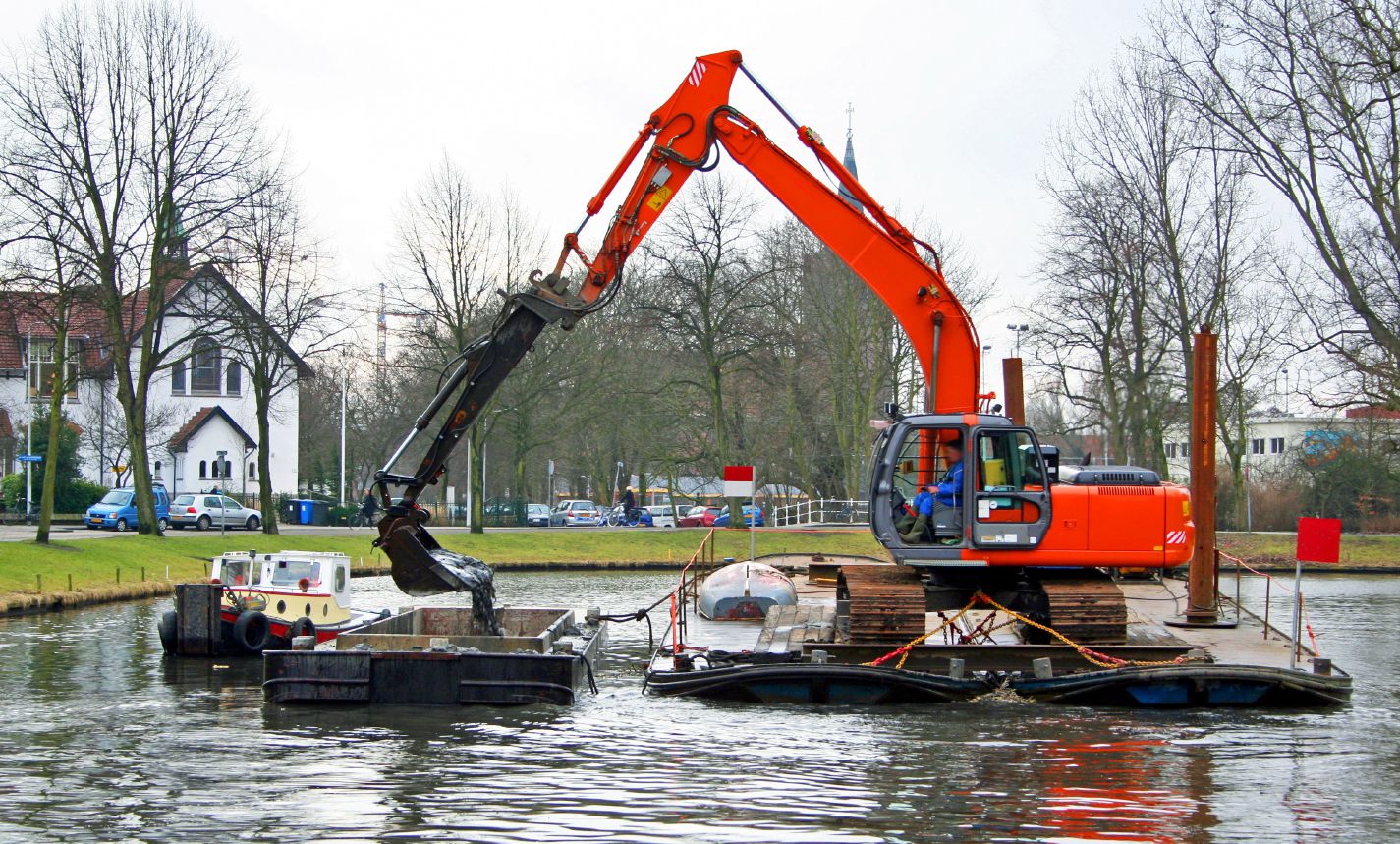
Hoists, Cranes and Derricks
Hazards of hoists include being struck by a heavy object, such as the boom or the load being moved.
To reduce these hazards:
- Stay clear when a hoist is being used unless you are part of the procedure and, in which case, never stand under a load or boom with a suspended load.
- Wear personal protective equipment, such as head, foot, eye, and hand protection at all times.
- Assess the hoisting systems for structural soundness by inspecting regularly for problems with welds, rivets, chains, pulleys, lines, blocks, hooks, etc.
- Secure power blocks with a safety chain.
- Ensure that cranes in use are secured to the barge.
- Do not try to help lift a load being hoisted.
Winches
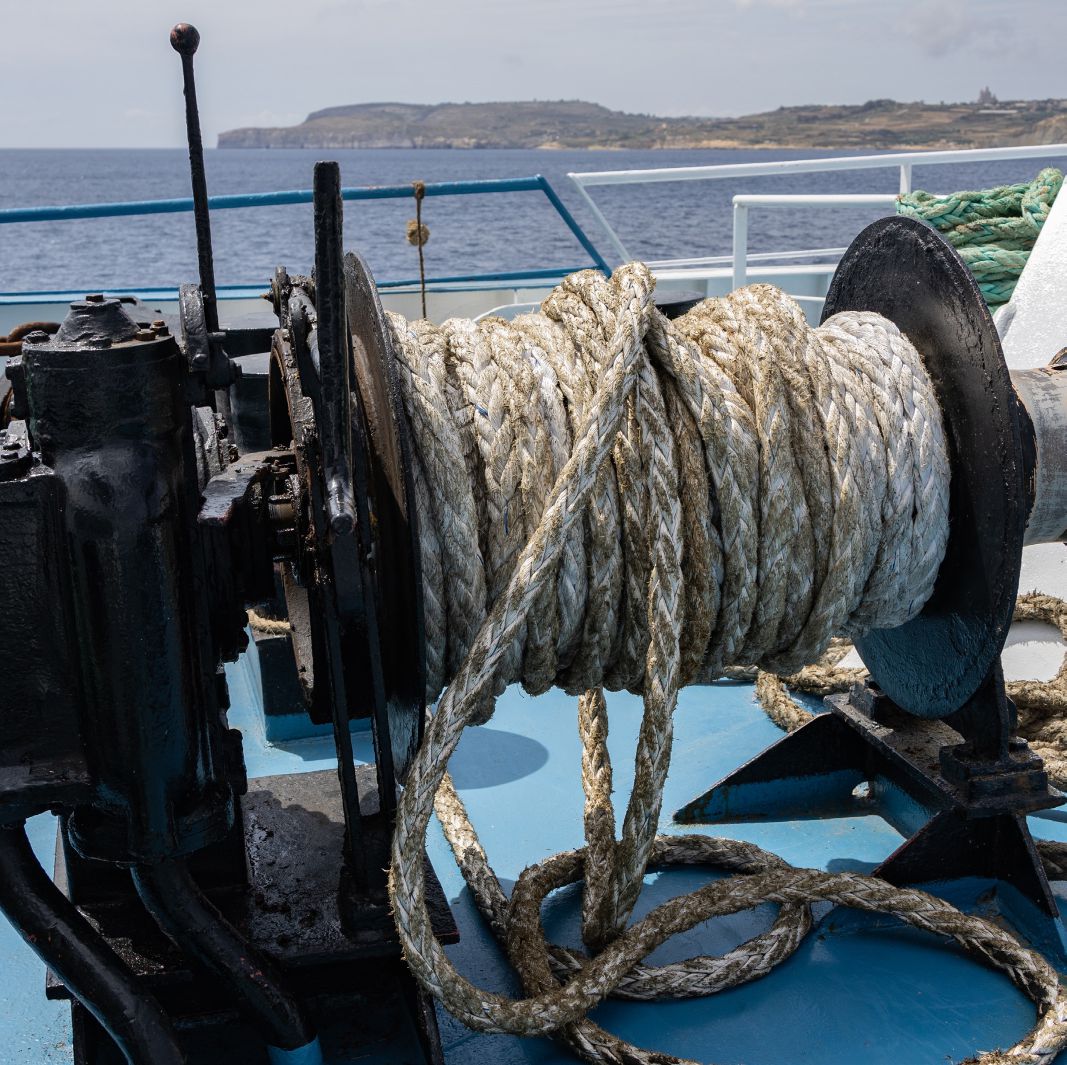
Operating or working near winches may potentially expose employees to hazards such as body parts caught in a winch drum, being struck by a broken line or cable, and tripping over a line or cable.
- Use a device or tool, never your hand, to keep the winch line spooling properly.
- Enclose the winch drum in a cage if practical.
- Stay off the deck unless you are part of the operation.
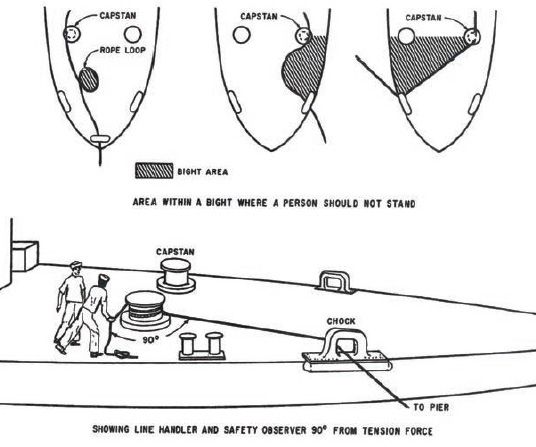
- Never stand in, on, over, or in line with lines or cables connected to winches when they are under tension. The danger zone lies within 15 degrees of either side of a line under tension.
- Never step on or walk over the winch drum.
- Inspect the winch system regularly for problems associated with general or localized deterioration, cracked welds, and other structural, mechanical, or electrical deficiencies.
- Inspect lines and cable systems regularly, including blocks, hooks, and associated components, for signs of damage or deterioration.
- A guard should be installed between the winch operator and the connected cables to protect the operator from potential whiplash.
- Never stand in the bight of a line.
Regulation of Workplace Safety on Deck Barges
For construction barges underway and other “uninspected vessels,” the U.S. Coast Guard oversees fire and lifesaving equipment and overall navigational matters. Its regulations for uninspected vessels are found in the Code of Federal Regulations, 46 CFR Part 25:
- Life Preservers and Other Lifesaving Equipment [46 CFR 25.25]
- Fire Extinguishing Equipment [46 CFR 25.30]
- Backfire Flame Control [46 CFR 25.35]
- Ventilation [46 CFR 25.40]
The U.S. Occupational Safety and Health Administration (OSHA) exercises its authority to regulate employers for all working conditions not covered by U.S. Coast Guard regulations on these vessels, provided that the vessel is in the geographic jurisdiction of OSHA.
For marine construction activities, 29 CFR Part 1926 standards apply. OSHA standards can be found at www.osha.gov