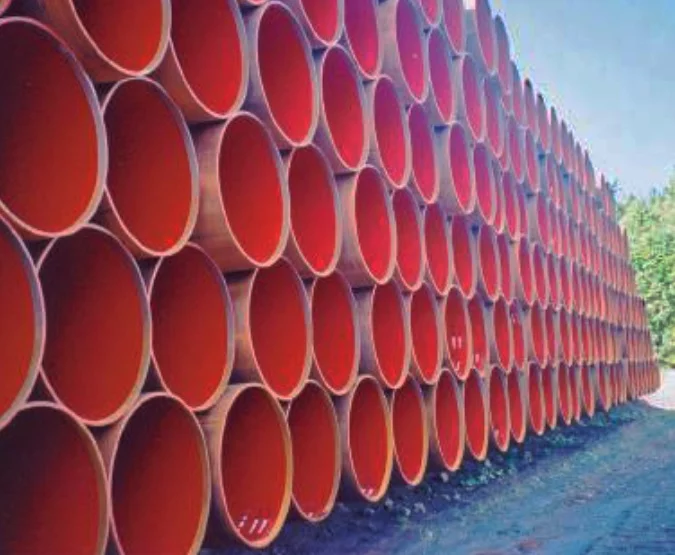
Flow efficiency coatings are used on a case by case basis to improve pipeline flow. When discussing this product there are many attributes often missed, all of which bring value whether economic or safety related.
In simple terms, a flow efficiency coating is developed to eliminate turbulent flow within the line. This turbulence is created due to the natural peaks and valleys of the steel surface. With the proper product selection and application, laminar flow may be achieved, benefitting the operator in the short-term and long-term via the new efficiency created. This value can be found on both the OPEX and CAPEX sides for a pipeline operator, reducing overall spend associated with the line dramatically.
To dig deeper, we have asked an industry expert, Dr. Jeffrey D. Rogozinski, Global Product Director at Sherwin-Williams to answer a few questions.
What is the smoothness factor achieved when using a flow efficiency product and how does that correlate to efficiency?
Dr. Rogozinski: Flow is directly impacted by the smoothness of the coating system. While most specifications call for less than 5 microns smoothness, Pipeclad® Flowliner 930R HS Ultrasmooth consistently gets less than 2 microns values during plant applications.
How does this coating reduce cost on both operations expenses and up-front capital?
Dr. Rogozinski: For upfront installation cost savings, the flow efficiency coatings demonstrably reduce the drying and commissioning times for the installed pipeline. Some studies have shown a pigging reduction time by up to three weeks.
Does this coating reduce pressure loss and what is the subsequent benefit?
Dr. Rogozinski: Reductions in pressure loss afford the end user options such as possibly reducing the number of compressors and increased distancing between compressors, and thereby reducing the cost of operations.
Odorants can be absorbed into bare steel pipe causing safety concerns. Therefore, pickling has become a normal industry practice. Flow efficiency does not absorb odorants. What is the science behind this and can it eliminate pickling and associated cost?
Dr. Rogozinski: Many thiol derivatives will react with carbon steel surfaces. When they react, they are no longer in the gas stream and therefore not performing the duty of warning consumers that a gas leak may be present by the characteristic smell of sulfur. You want to keep the odorants in the gas. To do this, you can create a barrier between the steel and the gas with a properly formulated flow efficiency coating. This prevents the mercaptan-based odorants from reacting with the steel.
Are there true case studies with customer data?
Dr. Rogozinski: Yes, one recent study illustrated where a 50,000-foot stretch of 8-inch diameter distribution pipe that was coated with Pipeclad 930R HS Ultrasmooth flow efficiency coating cost only 53% of what “pickling” the line would have cost, not to mention the “downtime” associated with the pickling process. Based on this, the cost saving practice of internal coating is now standard practice for this company.