A MAJOR SEGMENT OF THE MARINE WORLD COPES WITH UNCERTAINTY
Crystal balls are fun at carnivals, state fairs and parties—and let’s face it, everybody wonders about the future. But when multi-million — or billion —dollar construction projects are based on projections of future activity, a lot is riding on uncertain or incomplete data.
In the uncertain column are the potential impacts of President Trump’s tariffs, which have been announced, then modified or postponed. Their effect so far has been to increase the volume of international shipping, before the holiday stocking season and the cost of goods goes up.
In addition, the administration has rescinded or simply refused to pay money for projects previously approved by Congress. Although no port expansion or rehabilitation projects have been reported as affected, other marine construction projects—including a wind energy installation off of Rhode Island—have been canceled. Where is port construction headed? Let’s look at what we know.
Container traffic at the nation’s largest ports was steady or increasing in recent months
The Port of New York and New Jersey, the largest port on the U.S. East Coast, moves more than 7 million TEUs (twenty-foot-equivalent- units, or over 4 million containers) annually. In July, import TEUs were up 2.8 percent year-todate (YTD) over 2024.
More to the point, construction is proceeding with no change.
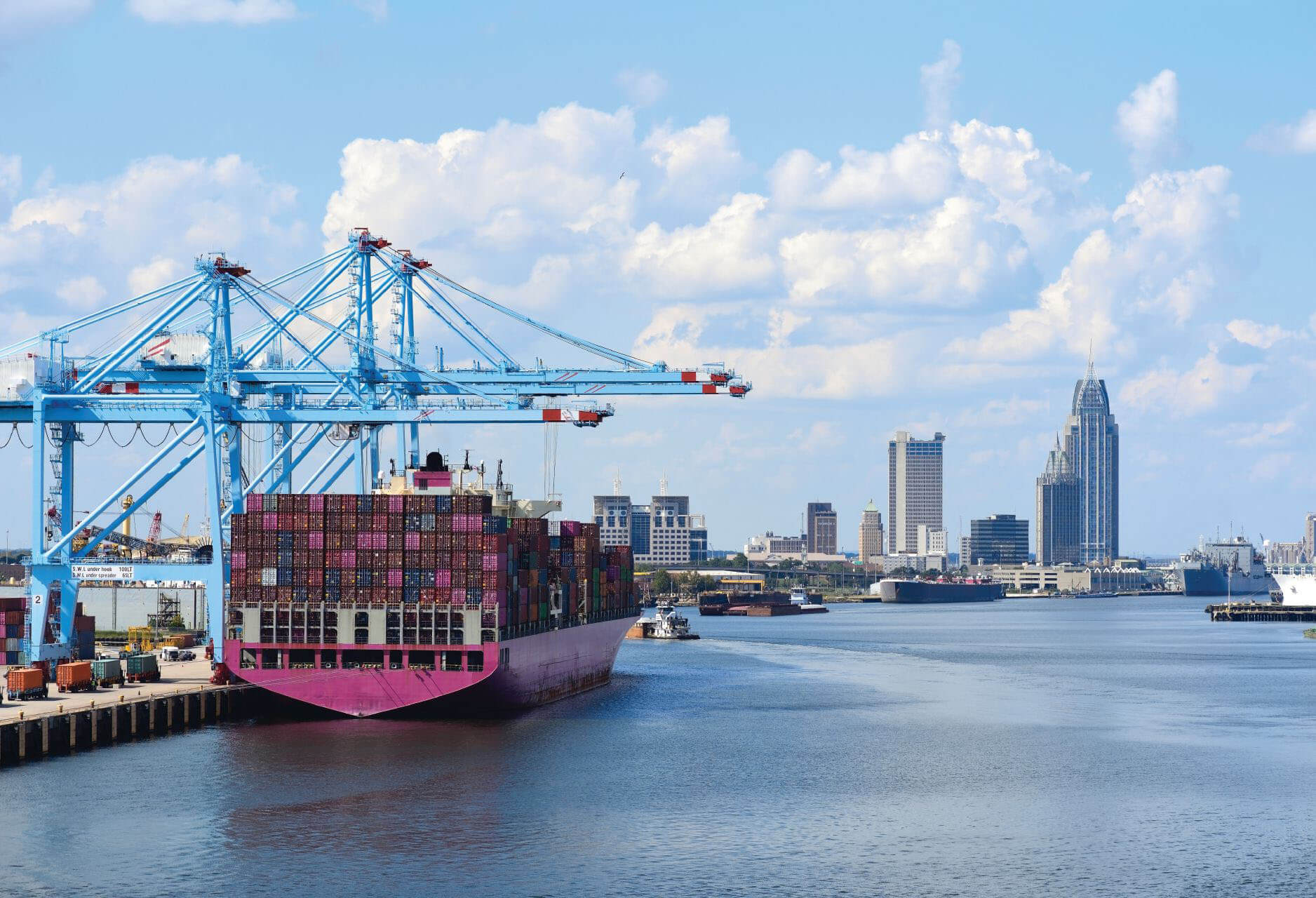
“The Port is undergoing major development to remain ahead of record cargo volumes as well as maintaining the Port of New York and New Jersey’s position as a top international cargo hub,” the Port states on its website. “As a result of ongoing development, the Port has achieved 215 feet of air draft and 50 feet shipping channel in our overall capability area to accommodate the world’s largest vessels. The Port of New York & New Jersey’s terminal operators have invested over $3 billion over the last 20-year period on port infrastructure, systems and equipment.”
Port Houston also has had a banner year.
“Throughout this year Port Houston has continued to demonstrate strong capacity for growth in containerized cargo and has seen its largest volumes ever,” the Port wrote on its website. “Year-todate, Port Houston has handled 2,562,506 TEUs, up 6 percent and making this year the fastest-paced in the Port’s history.”
Moreover, federal funding for its construction projects has been increased.
“Port Houston is pleased the President’s FY 2026 budget has allocated $161 million for the Houston Ship Channel Expansion- Project 11,” the Port wrote in a June press release. “In addition, the President’s FY 2026 Operations and Maintenance (O&M) budget allocated $53.6 million to the Houston Ship Channel, the nation’s top-ranked waterway. These funds are in addition to the $33 million for Project 11 construction and $98 million for O&M in the U.S. Army Corps of Engineers (USACE) Workplan for FY 2025 that was released a few weeks ago.
“Later this summer, Port Houston will complete the remaining Portled portion of Project 11 dredging, between Bayport Ship Channel and Barbours Cut Ship Channel, with USACE leading the remaining portions of Project 11 in Barbours Cut and the upper Turning Basin. Project 11 is scheduled to be complete by 2029.”
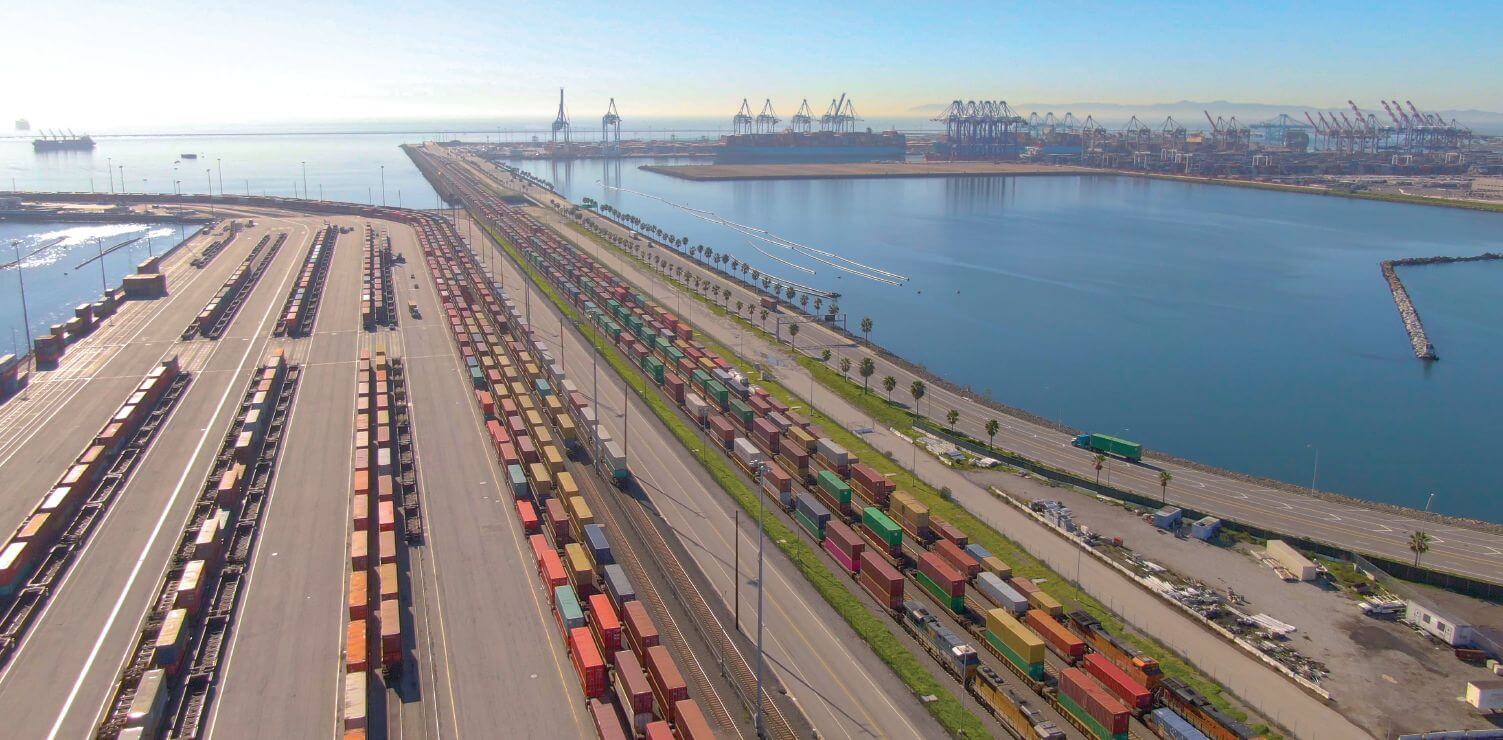
At the Port of Los Angeles, “After reaching new cargo heights in July, volume remained strong in August,” the Port stated in a news release. “The Port efficiently processed 958,355 TEUs, nearly the same as last year’s robust performance.”
“The Port of Los Angeles moved nearly 2 million containers in July and August combined,” Executive Director Gene Seroka said at a media briefing. “Retailers and manufacturers have continued to bring goods in early, both to get ahead of holiday demand and to hedge against any shifts in trade policy. Looking forward, I expect container volumes to ease through the rest of 2025, especially against last year’s unusually high benchmarks. That’s because much of the year-end holiday cargo has already arrived. And economic signals like slowing job growth and lingering inflation are making both importers and consumers a bit more cautious.”
Many industry observers echo Seroka’s reasoning.
“August shipment volumes to the U.S. dropped 15 percent, and the first week of September saw an even steeper 20-percent decline, a downward trend showing no signs of slowing,” said Bryn Heimbeck, president and co-founder of Trade Tech Inc., a provider of cloud-based solutions for the logistics industry. “Normally, August and early September mark the peak season, but current data instead points to continued weakness in the market.”
Trade Tech’s reporting is based on shipment departures from origin ports, not arrivals at destinations. That distinction, Heimbeck says, “means our data shows what’s coming, not what has already arrived, giving us a two- to four-week lead over arrival-based statistics.
“Looking ahead,” Heimbeck continued, “our latest departure data shows that August volumes fell 10 percent compared to June and July, with the first half of September down another 7 percent from the August average. This signals that the softening trend is not only continuing but also deepening as we move further into the fall.”
Last November, the U.S. DOT’s Maritime Administration (MARAD) announced plans to invest nearly $580 million from the Bipartisan Infrastructure Law to fund 31 port improvement projects in 15 states and one U.S. territory to increase capacity and efficiency at coastal seaports, Great Lakes ports and inland river ports. The funding came from MARAD’s Port Infrastructure Development Program (PIDP), which received $2.25 billion from the 2021 Bipartisan Infrastructure Law. Most of the money has been committed and many of the projects are underway. Some have been completed. The long timelines and visible results make them projects unlikely to be defunded. The question is what the future holds. “Just as shipping companies tend to overbuild tonnage that is too big and too fast in order to beat the competition, ports also tend to overbuild in hopes of pushing out their neighboring ports,” says Dr. Richard Burke, retired ABS Professor of Naval Architecture & Marine Engineering at the Maritime College of the State University of New York (SUNY Maritime). “However, in both cases, when cargo volume falls, everyone has an excess of capacity which can cause hard times at least, and shakeouts at worst. We will see.”