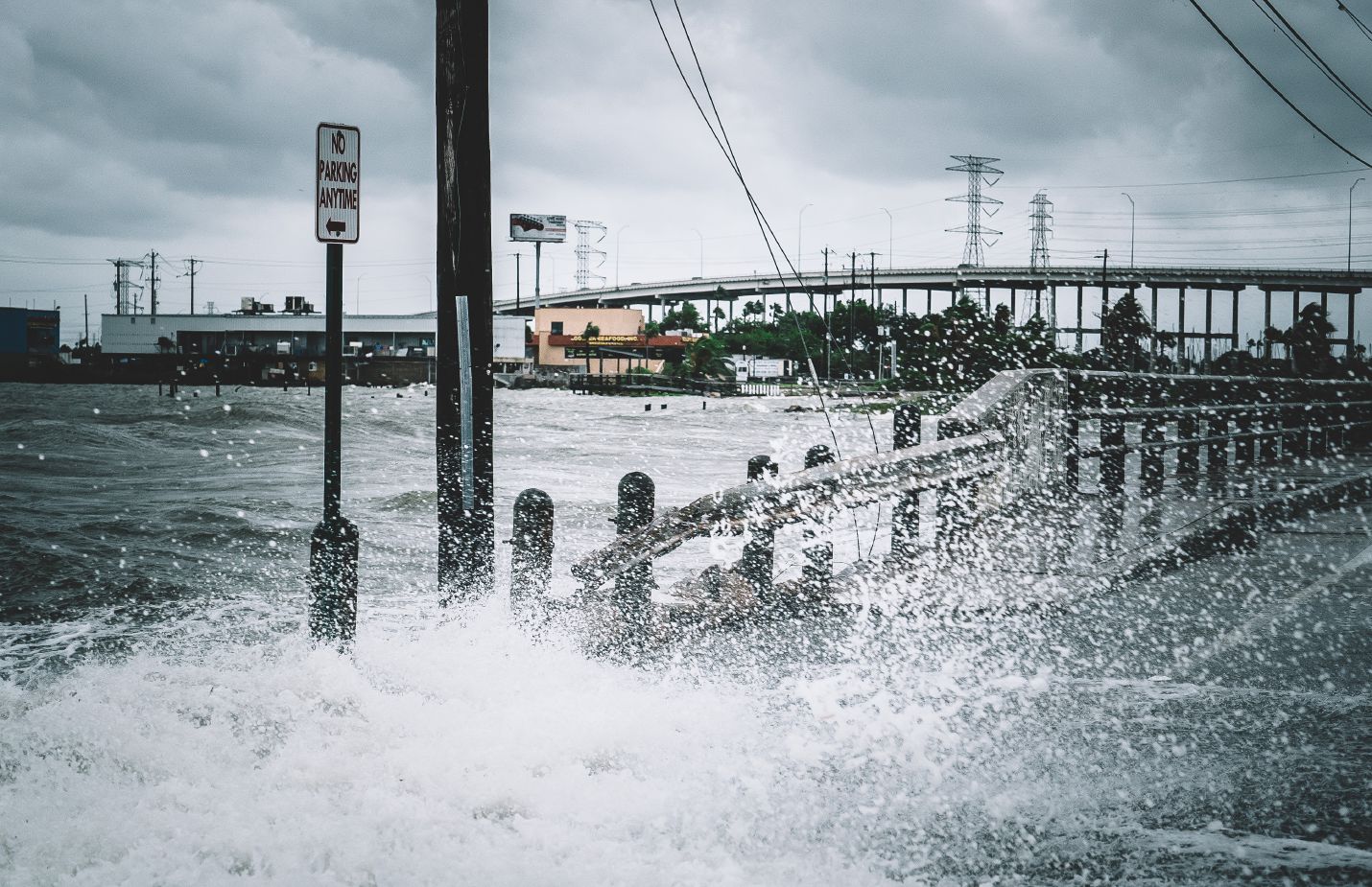
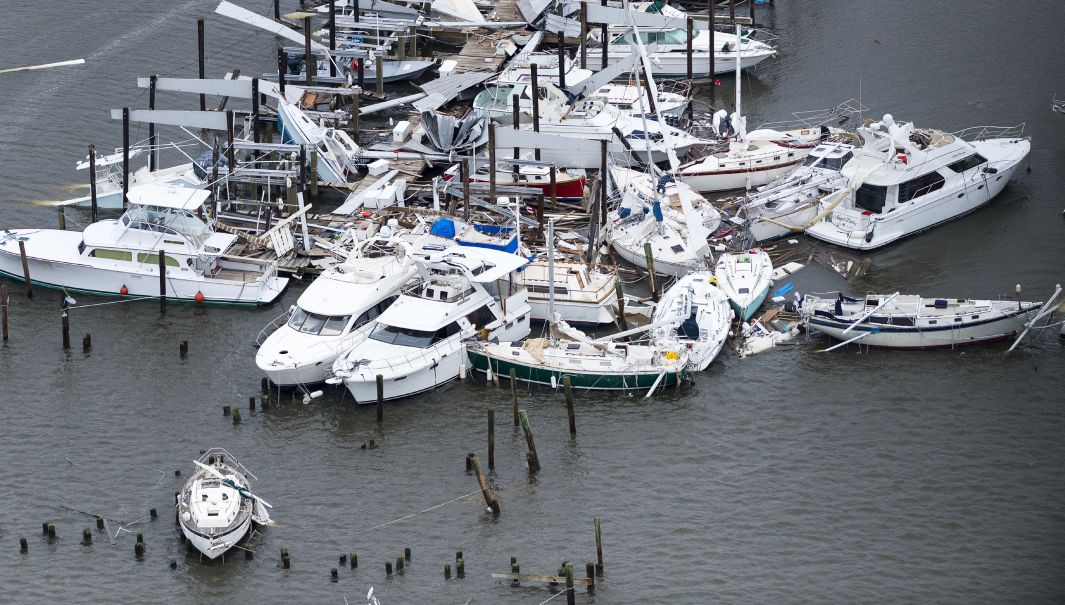
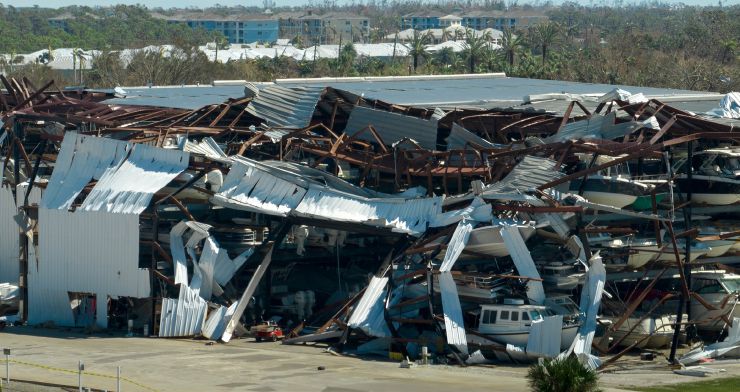
Hurricanes are a form of tropical cyclones that are capable of causing devastating damage to communities.
Hurricanes are storm systems with circulating air and sustained wind speeds of 74 miles per hour or higher. The strongest hurricanes can have wind speeds exceeding 155 miles per hour. Areas on the Atlantic Coast, near the Gulf of Mexico, as well as parts of the Southwestern United States are vulnerable to hurricanes. The Atlantic hurricane season lasts from June to November and peaks between August and October. The Eastern Pacific hurricane season begins mid May and also ends in November. This article provides information on hurricane warnings, hazards that hurricanes cause, and precautions that workers and employers should take after a hurricane has occurred.
The Preparedness section outlines the warnings and watches used for hurricanes, including the five categories used to rate the strength of a hurricane. The page also contains information on creating evacuation plans and supply kits.
The Response/Recovery section features a link to OSHA’s Hurricane eMatrix, which features information on hazard exposures and risk assessments for hurricane response and recovery work. The information in the matrix is organized based on the types of activities performed so that it is easy for workers to identify the precautions they should take based on the tasks they will be performing.
OSHA and NOAA are working together on a public education effort aimed at improving the way people prepare for and respond to severe weather. This page is designed to help businesses and their workers prepare for hurricanes, and to provide information about hazards that workers may face during and after a hurricane.
Employer Responsibilities
Each employer is responsible for the safety and health of its workers and for providing a safe and healthful workplace for its workers. Employers are required to protect workers from the anticipated hazards associated with the response and recovery operations that workers are likely to conduct. For additional information on Workers’ Rights, Employer Responsibilities, and other services OSHA offers, visit OSHA’s Employers Page, Workers Page and Publications.
Preparedness
It is important to have an evacuation plan in place to ensure that workers can get to safety in case a hurricane may affect the area. A thorough evacuation plan should include:
Some businesses are required to have an Emergency Action Plan meeting the requirements under 29 CFR 1910.38, see Evacuation Plans and Procedures eTool for more information. Ready.gov – Federal Emergency Management Agency (FEMA) has more information on evacuation plans as well as suggestions for precautions to take if you are unable to evacuate and do not have a safe room.
In addition to having evacuation plans in place, it is important to be familiar with the warning terms used for hurricanes, as well as your local community’s emergency plans, warning signals, and shelters. Hurricane/ Tropical Storm watches mean that a hurricane or tropical storm is possible in the specified area. Hurricane/Tropical Storm warnings mean that a hurricane or tropical storm is expected to reach the area, typically within 24 hours.
Be prepared to follow instructions from the local authorities and to evacuate if instructed to do so.
Saffir – Simpson
Hurricane Wind Scale
| Category | Sustained Winds | Type of Damage Due to Hurricane Winds |
| 1 | 74-95 mph 64-82 kt 119-153 km/h | Very dangerous winds will produce some damage: Well-constructed frame homes could have damage to roof, shingles, vinyl siding and gutters. Large branches of trees will snap and shallowly rooted trees may be toppled. Extensive damage to power lines and poles likely will result in power outages that could last a few to several days. |
| 2 | 96-110 mph 83-95 kt 154-177 km/h | Extremely dangerous winds will cause extensive damage: Well-constructed frame homes could sustain major roof and siding damage. Many shallowly rooted trees will be snapped or uprooted and block numerous roads. Near-total power loss is expected with outages that could last from several days to weeks |
| 3 (major) | 111-129 mph 96-112 kt 178-208 km/h | Devastating damage will occur: Well-built framed homes may incur major damage or removal of roof decking and gable ends. Many trees will be snapped or uprooted, blocking numerous roads. Electricity and water will be unavailable for several days to weeks after the storm passes. |
| 4 (major) | 130-156 mph 113-136 kt 209-251 km/h | Catastrophic damage will occur: Well-built framed homes can sustain severe damage with loss of most of the roof structure and/or some exterior walls. Most trees will be snapped or uprooted and power poles downed. Fallen trees and power poles will isolate residential areas. Power outages will last weeks to possibly months. Most of the area will be uninhabitable for weeks or months. |
| 5 (major) | 157 mph or higher 137 kt or higher 252 km/h or higher | Catastrophic damage will occur: A high percentage of framed homes will be destroyed, with total roof failure and wall collapse. Fallen trees and power poles will isolate residential areas. Power outages will last for weeks to possibly months. Most of the area will be uninhabitable for weeks or months. |
Additional Information:
US Environmental Protection Agency (EPA):
www.epa.gov/natural-disasters/hurricanes
Federal Emergency Management Agency (FEMA):
www.ready.gov
The Saffir-Simpson Hurricane Wind Scale is a 1 to 5 rating based on a hurricane’s sustained wind speed. This scale estimates potential property damage. Hurricanes reaching Category 3 and higher are considered major hurricanes because of their potential for significant loss of life and damage. Category 1 and 2 storms are still dangerous, however, and require preparatory measures. In the western North Pacific, the term “super typhoon” is used for tropical cyclones with sustained winds exceeding 150 mph. This affects one or more U.S. territories ( i.e. Guam and the Mariana Islands).
Employers whose workers will be involved in emergency response operations for releases of, or substantial threats of releases of, hazardous substances regardless of the location of the hazard must comply with OSHA’s Hazardous Waste Operations and Emergency Response (HAZWOPER) standard, 29 CFR 1910.120. This may include emergency response following an earthquake. Instruction CPL 02-02-073 describes OSHA enforcement procedures under the relevant provisions of the HAZWOPER standard.
The U.S. Environmental Protection Agency (EPA) has promulgated a standard applying OSHA’s HAZWOPER standard to state and local government workers in states where there is no OSHA-approved State Plan. See 40 CFR Part 311.
OSHA’s HAZWOPER Safety and Health Topics page explains requirements of the OSHA HAZWOPER standard, including required worker training.
Equipping
Get emergency supply kits and keep them in shelter locations
Training and Exercises
OSHA’s Disaster Site Worker Outreach Training Program is a training program for workers who provide skilled support services (e.g., utility, demolition, debris removal, or heavy equipment operation) or site clean-up services. The program highlights the differences between disaster sites and construction sites, and emphasizes the need for workers and employers to have preincident training.
Response/Recovery
OSHA’s Hurricane eMatrix outlines the activities most commonly performed during hurricane response and recovery work and provides detailed information about the hazards associated with those activities. The eMatrix is designed to help employers make decisions to protect workers and offers recommendations for personal protective equipment, safe work practices, and precautions for each activity.