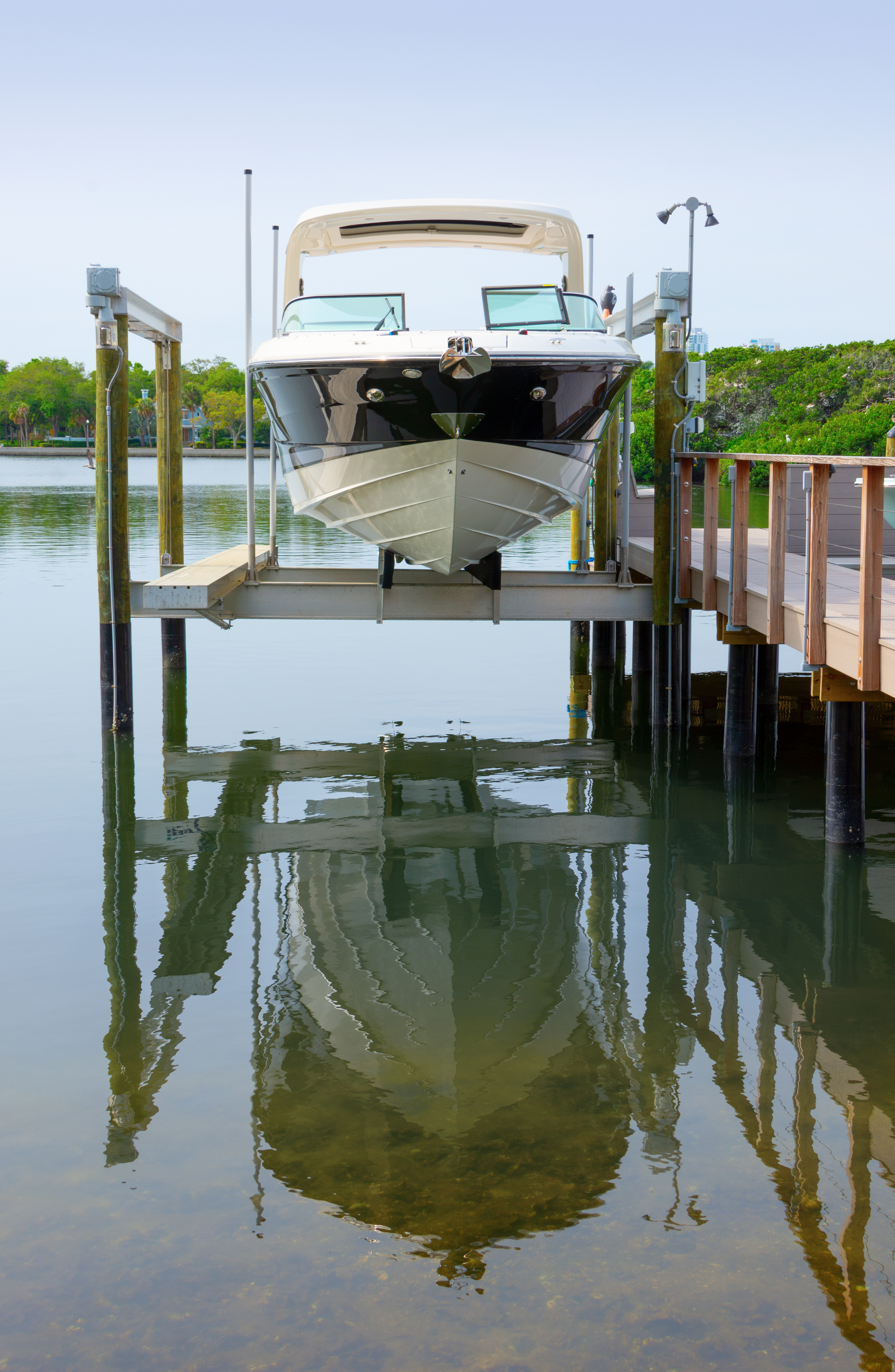
Nothing may be more important for the life expectancy of ones Boat Lift then…routine maintenance. The following “Tips” are provided courtesy of Golden Boat Lifts of Ft. Myers, FL.
Heed the Weight Warning
Golden Boat Lifts are designed to meet particular specifications, which means putting more weight on your lift than it’s designed to hold can lead to devastating results. Stick to the specs to ensure a healthy life for your lift.
Remove the Cables from the Water
Don’t leave your cables dangling in the water while you’re away.
Rinse the Cables
Every time you launch your boat, rinse the cables to remove salt crystals that the water leaves behind.
Oil Regularly
Galvanized and stainless steel cables should have a squirt or two of penetrating oil applied periodically to minimize abrasion and preserve the galvanized coating.
Do Not Lubricate with Grease
Grease actually traps moisture inside the strands of the cables.
Do Your Homework before Changing Cable Materials
Stainless steel often holds up better in saltwater, but it requires different sheave and drum sizes than galvanized cables, which means you shouldn’t simply swap out the cables without taking the whole boat lift’s needs into consideration.
Don’t Have People in the Boat while It’s on the Lift
If people are jumping into and out of the boat while it’s on the lift, they’re creating shock and strain to the hoist motor and cabling.
Remove the Plug while the Boat is on the Hoist
Rainwater can collect while you’re away, which can cause added weight to your boat and further stress to your boat lift’s wiring and hoist. Leaving the plug open allows your boat to maintain its natural weight.
Monitor the Drum
To avoid slack, which can cause tangling and other damage, monitor the cable as it’s winding onto the drum. Even wear will help lengthen the life of the cables.
Check for Proper Sheave Alignment
Improper alignment can put undue pressure on the cable, likely shortening the life of both the cable and the sheave. If you’re unsure, call a professional.