General
Ring buoys shall be provided and readily available at intervals not exceeding 200 feet on all structures over water under the course of construction. Safety nets and safety harnesses are required
Where employees are concentrated in groups, there shall be additional ring buoys consisting of not less than 1 additional buoy for each 25 employees in that area. Portable standards or equivalent means to hold the ring buoys in plain view shall be provided.
All floating rigs, with the exception of small work rafts or pontoons, shall be equipped with life vests, life preservers, and at least 2 ring buoys.
Diving/Underwater Work
The employer shall develop and maintain a safe practice manual, and make it available at the dive location for each dive team member. The employer shall keep a record of each dive. The record shall contain the diver’s name, his or her supervisor’s name, date, time, location, type of dive (scuba, mixed gas, surface supply), underwater and surface conditions, and maximum depth and bottom time.
Each dive team member shall have the experience or training necessary to perform assigned tasks safely.
Each dive team member shall be briefed on the tasks, safety procedures, unusual hazards or environmental conditions, and modifications made to the operating procedures. The dive shall be terminated when a diver requests it, the diver fails to respond correctly, communication is lost, or when the diver begins to use the reserve breathing gas.
Environmental Considerations
The project supervisor shall obtain daily weather forecasts before beginning work and as frequently thereafter as required to monitor any potential weather problems.
When a local weather storm warning exists, consideration shall be given to the recommendations of the manufacturer for securing the crane.
Personal Flotation Devices (PFD’s)
U.S. Coast Guard (USCG)-approved International Orange personal flotation devices (PFDs) equipped with USCG-approved automatically activated lights and retroreflective tape shall be provided to and properly worn by all persons in the following circumstances:
- On floating pipelines, pontoons, rafts, or stages;
- On structures or equipment (including heavy operating equipment that is not secured to the structure) extending over or next to water except where guardrails, personal fall protection system, or safety nets are provided for employees;
- Working alone at night where there are drowning hazards, regardless of other safeguards provided;
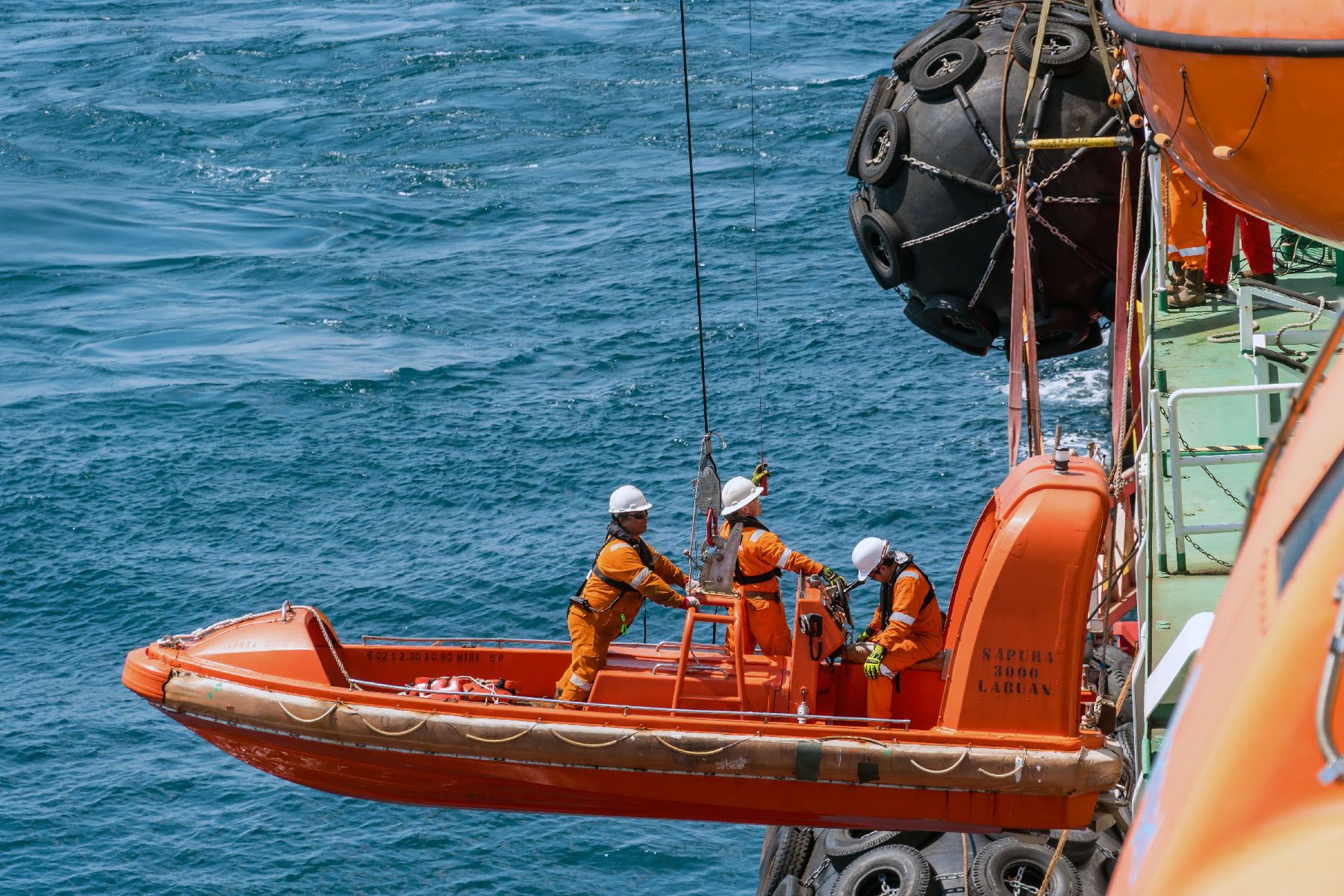
- In skiffs, small boats, or launches, unless in an enclosed cabin or cockpit; or
- Wherever there is a drowning hazard.
Lights on Type III and Type V PFDs are not required on projects performed exclusively during daylight hours.