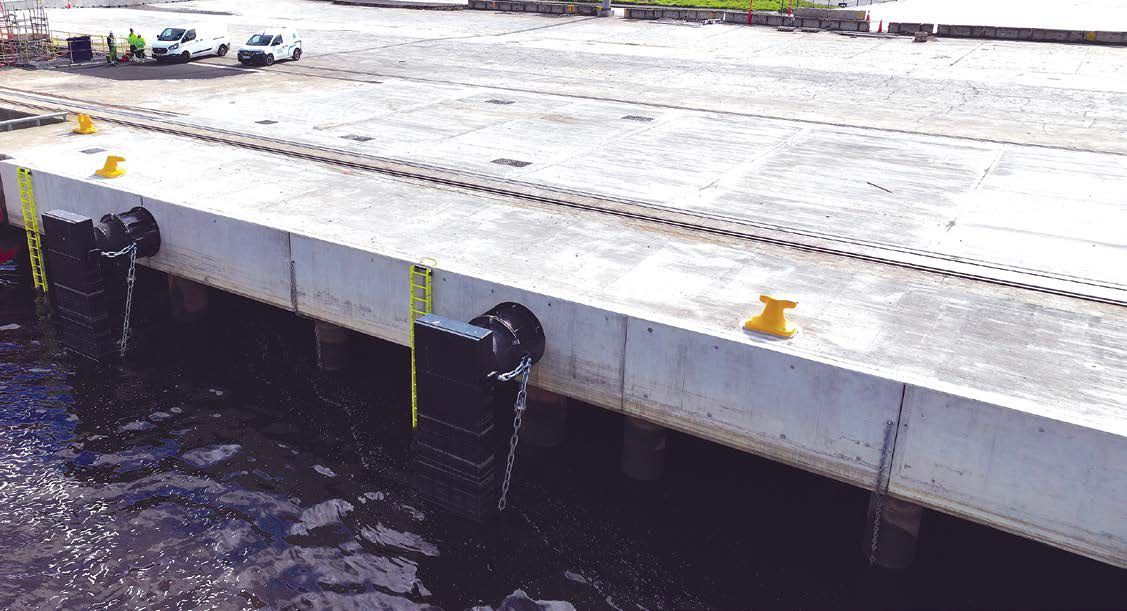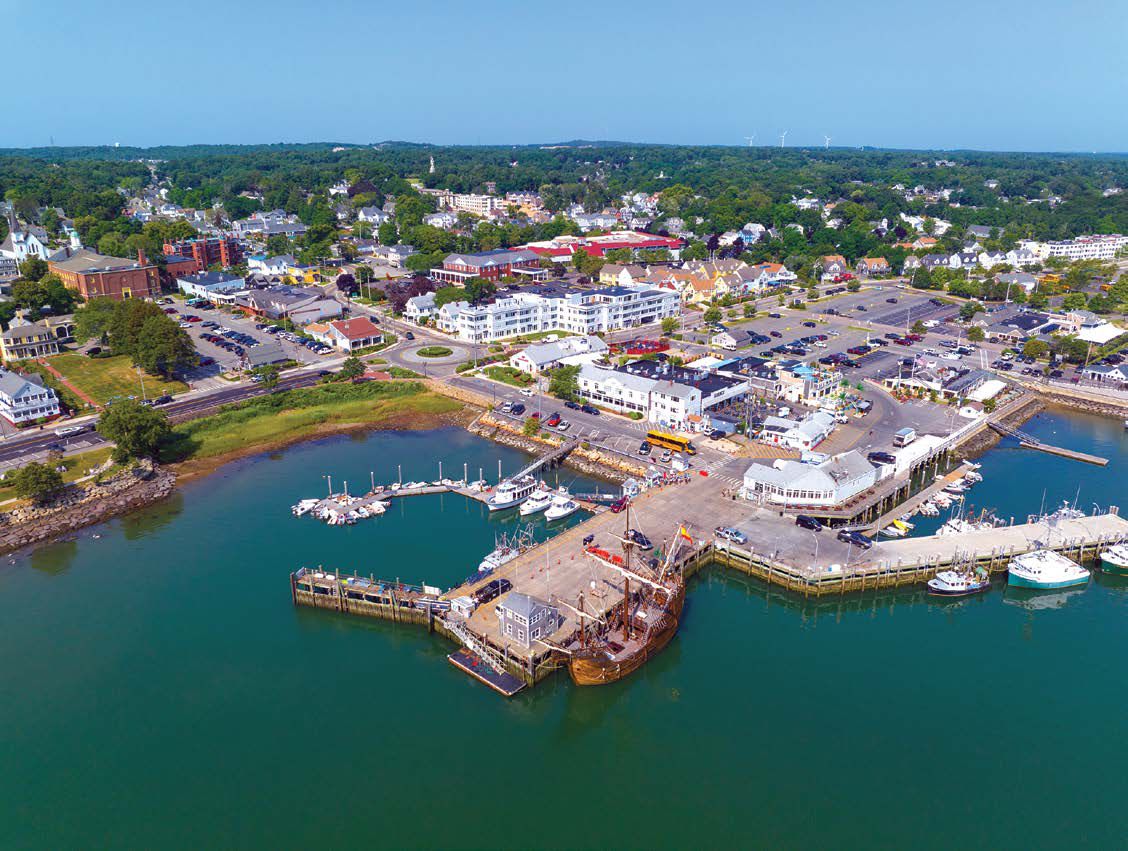
As part of an ambitious multi-year harbor management plan, Plymouth, Massachusetts replaced an old small wooden dock with an SF Marina floating concrete pontoon solution. Located adjacent to a boat ramp that serves a robust commercial fishing and aquaculture fleet, it nearly doubles the footprint of the older dock. But the bigger bonus is that it will no longer need to be removed and reinstalled every year to protect it from the ravages of the area’s fierce winter storms.
Even in summer, the Plymouth Bay location is exposed to a strong southeast wind with a significant fetch that generates 0.6–1.2-meter waves. Not only did this necessitate hiring a crane twice a year to remove and replace the 30-meter timber dock, but seasonally limited access to commercial vessels. “We wanted a way to improve ship-to-shore access by making it as easy and safe as possible, year-round,” said Chad Hunter, Plymouth harbormaster. “By expanding the dock and reconstructing the ramp, smaller operators can bring their harvest ashore much faster.” With the new dock, more operators can move their catch from their larger moored vessels to their waiting vehicles via skiffs.
Hunter had been talking to Mason Sears, SF Marina Systems VP of sales and marketing, for several years and had seen how SF Marina transformed nearby Safe Harbor Plymouth after storms had ravaged its docks. “I was impressed by what they had done there,” said Hunter, “and by the size and scale of the SF Marina solution. It’s built for longevity and to withstand New England’s harsh seasonal storms.”
New England Building & Bridge Co. installed three SF Marina Type 1240 floating concrete pontoons. Engineered to cope with arctic conditions and virtually unsinkable, they deliver stability, strength and durability. Internal and external pile guides carry the 24-inch steel piles driven by AGM Marine Contractors. Integrated utility ducts provide hidden power and water service.
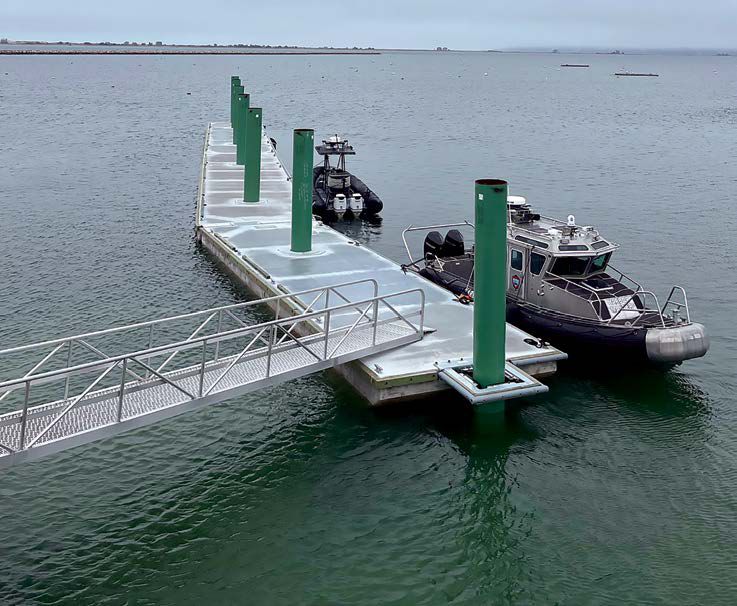
The 190-foot-by-14-foot dock has a shallow 12- degree bend to match the harbor contour. A unique connector with a 2-by-99-tons-per-joint breaking load was cast into the adjoining pontoons for a consistent transition and absolute rigidity.
“The new docks are beautiful,” said Hunter, “and meet our plan to prepare for changes in climate and sea level and the resultant intense storm activity.” The Federal Emergency Management Agency (FEMA) noted that nearby Boston is expected to experience a 100-year storm every 2–3 years by mid-century.
Known worldwide as the site where the Mayflower pilgrims landed in 1620, Plymouth is also known for its commercial fishing industry that actively creates jobs and contributes to the character of the downtown waterfront. Plymouth is consistently one of the top five ports for lobster landings in Massachusetts and has a growing aquaculture program producing sustainable seafood. Other commercial catches include scallops, blue mussel, striped bass and bluefin tuna.
For more information, visit: www.sfmarinausa.com.