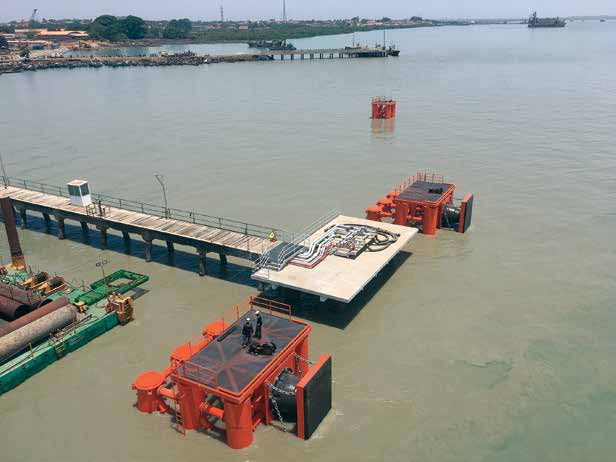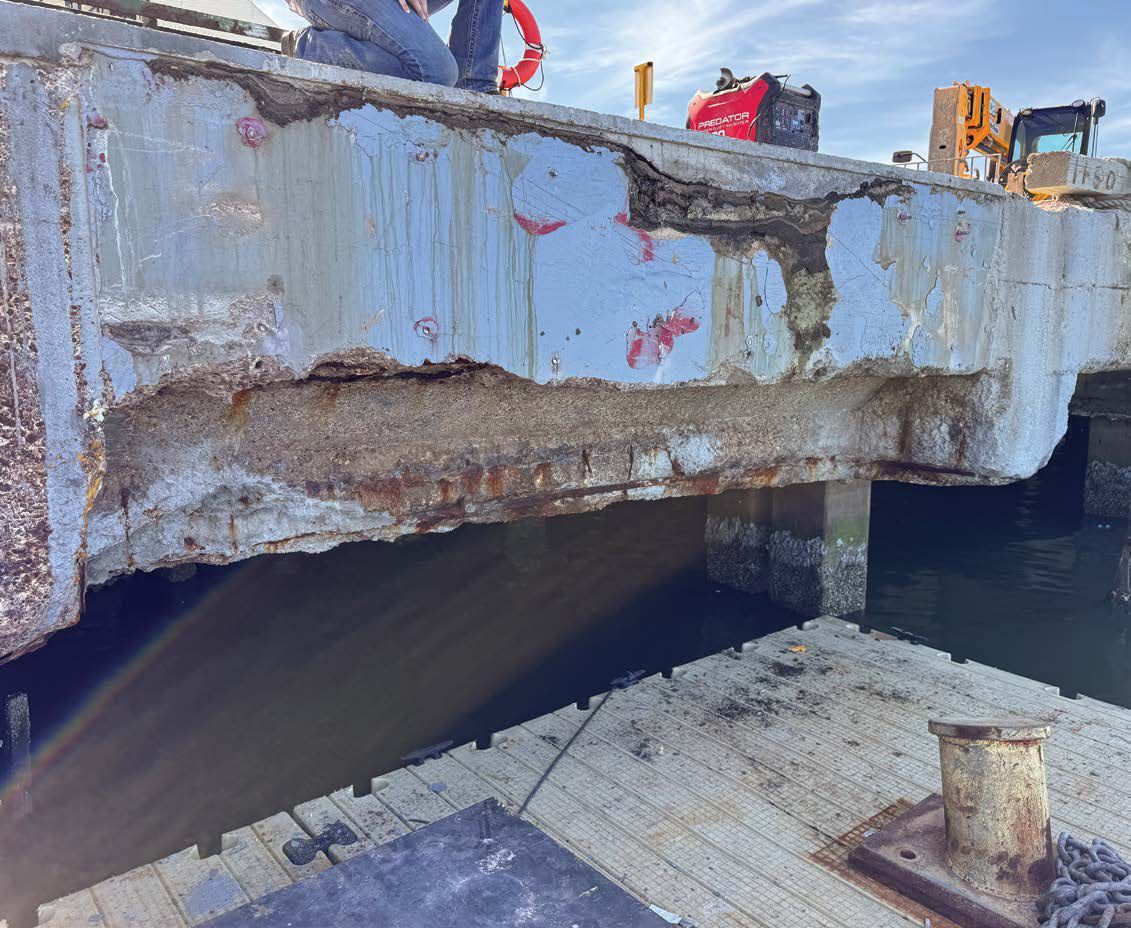
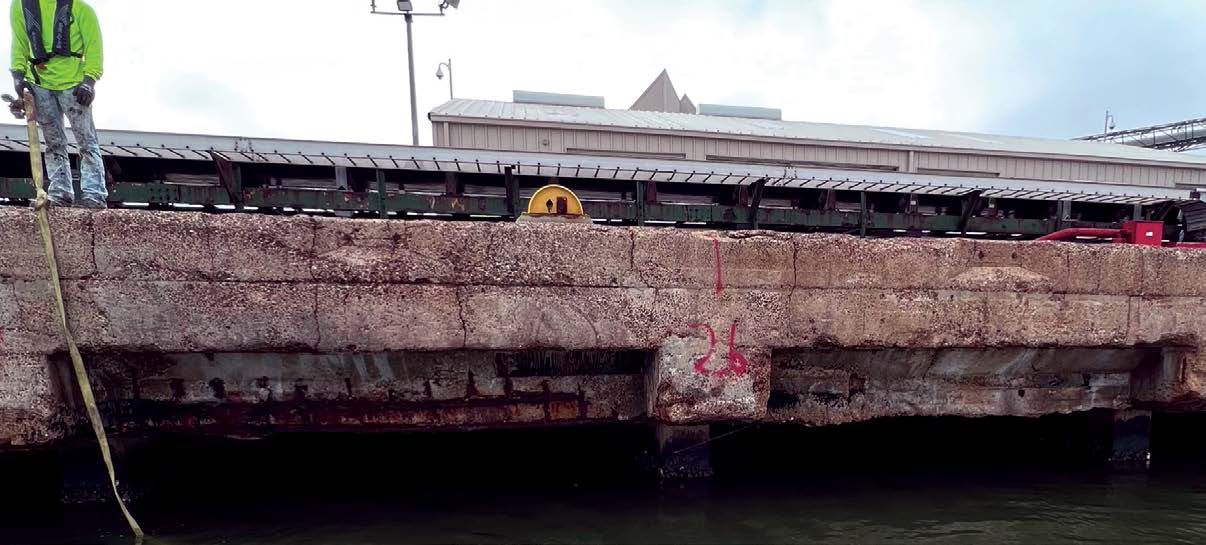
The Port of Galveston is a vital hub for both commercial and recreational maritime activities. As one of the busiest ports in the U.S is a key player in the cruise industry. However, its proximity to the marine environment poses challenges, field inspections indicated that approximately 50% of the longitudinal steel reinforcement in the beams had been lost to corrosion, significantly compromising the structural integrity and load-carrying capacity of the port facilities.
This degradation not only results in increased maintenance costs but also poses operational risks, potentially disrupting shipping and recreational activities. The economic implications extend beyond repair expenses, as structural failures could lead to costly downtimes and environmental hazards, highlighting the urgent need for effective corrosion management strategies.
Options for the Port of Galveston
Repair strategies for corrosion-damaged concrete structures encompass several techniques, which may be used in combination:
- Concrete Removal and Replacement: Involves identifying damaged areas, removing deteriorated concrete, cleaning steel reinforcement, and placing chloride-resistant concrete.
- Cathodic Protection: Mitigates corrosion using Sacrificial Anode CP (where reactive metals corrode instead of steel) and Impressed Current CP (which applies external current). Both need regular maintenance and anode replacement.
- Surface Treatments and Coatings: Prevents moisture and chloride ingress by applying sealers (like silanes) to reduce permeability and using protective epoxy coatings.
- Electrochemical Chloride Extraction (ECE): Uses an electric field to remove chloride ions from steel reinforcement, enhancing concrete longevity with minimal physical work.
Dr. Mo Ehsani developed a new repair technique that is a combination of methods (a) and (c) described above and the details of how the technique was successfully implemented in a major structural repair project in Port of Galveston.
FRP Panels as the smartest repair technique
Nearly four decades ago, non-metallic Fiber Reinforced Polymer (FRP) products transformed the repair and strengthening of deteriorating concrete structures, especially in challenging environments like ports. The wet layup technique involves saturating glass or carbon fiber fabrics with epoxy and applying them to concrete. This FRP system can achieve a tensile strength 2-3 times greater than steel, making it ideal for reinforcing corroded structures.
In addition to strengthening, FRP acts as a durable barrier against corrosion, lasting much longer than traditional paints. Unlike conventional methods, which require smooth surfaces and aren’t easily used underwater, the SPiRe® system is designed for efficient marine repairs.
Manufactured in Tucson, SPiRe panels feature a rigid core wrapped in layers of glass FRP, measuring 3/8- inch thick and weighing only 2.2 pounds per square foot. During installation, non-metallic GFRP rebars are added on-site. The lightweight shells are lifted into position, secured with anchor bolts, and filled with non-shrink grout for a solid bond.
This innovative approach saved time and money while providing long-lasting protection against salt spray and corrosion.
Construction advantages
The Port of Galveston’s facility faced severe corrosion and loss of reinforcing steel due to its low elevation above seawater. Traditional repair methods, like patching with wet layup Fiber Reinforced Polymer (FRP), were impractical due to limited headroom and high costs.
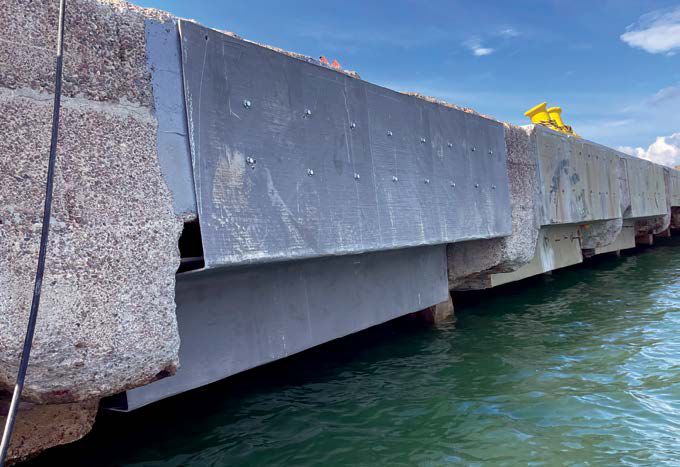
Initially, timber forms were proposed for concrete pumping, but access challenges made this option expensive. Instead, a cost-effective design-build solution using stay-in-place SPiRe panels was chosen. Custom-sized panels were manufactured in Tucson, Arizona, with non-corroding Glass Fiber Reinforced Polymer (GFRP) rebars as tension elements.
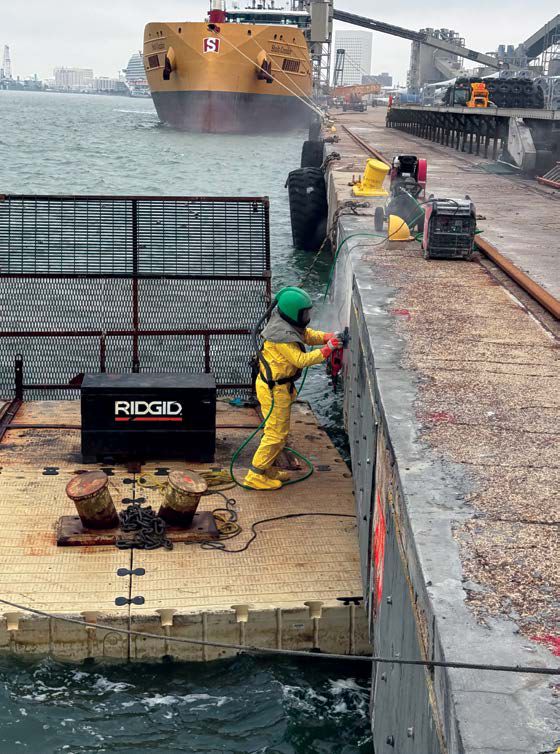
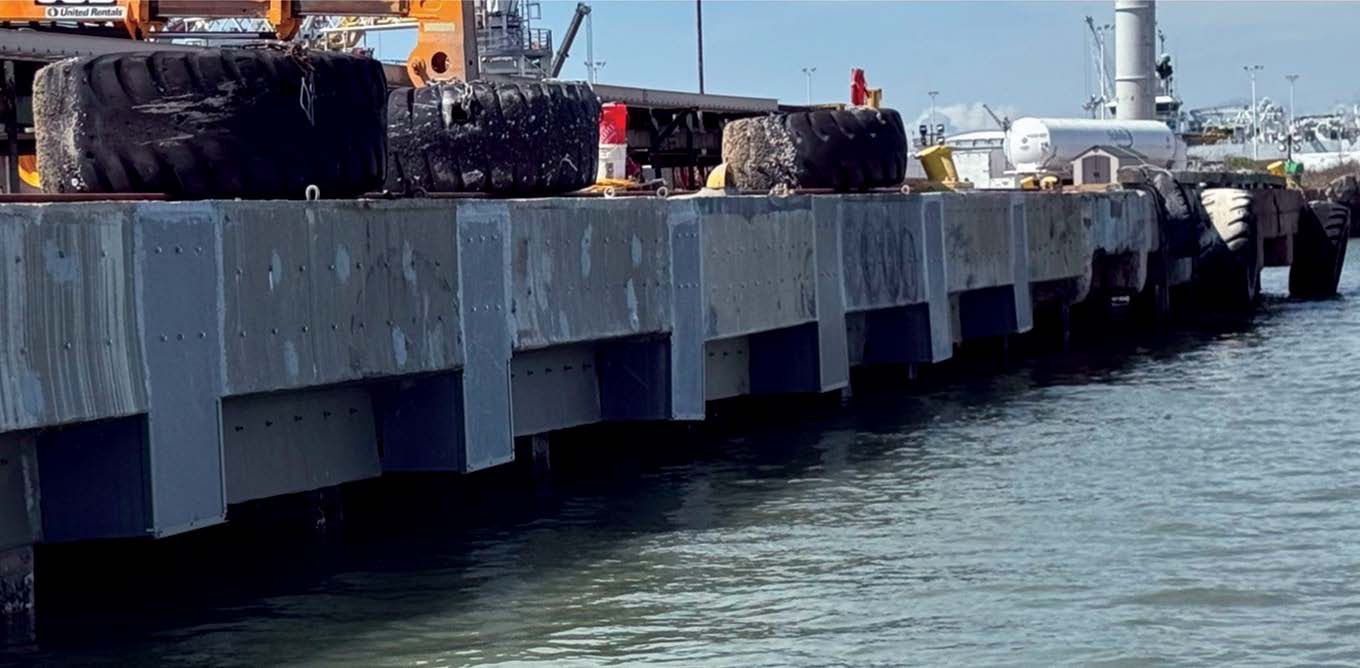
The installation involved divers positioning the lightweight panels under the beams, supported temporarily and secured with anchor bolts. Nonshrink cementitious grout filled the annular space, ensuring strong bonding between the old and new concrete.
This innovative approach minimized surface preparation, allowing for a rapid and flexible installation that fit the port’s schedule. The panels fully encapsulated the beams, providing protection from seawater and dry-wet cycles. The result was a durable, maintenance-free repair, ensuring the long-term sustainability of the facility.
Port of Galveston: Sustainable repairs for long-term structural integrity
Dr. Ehsani notes that the lightweight design allowed for easy handling, even in challenging access conditions, leading to accelerated installation and reduced labor costs. Dr. Ehsani states, “Eliminating the need for cofferdams not only cut costs but also streamlined the project timeline. The custom FRP panels effectively addressed corrosion issues while the non-corroding GFRP rebar ensures long-term durability against the harsh marine environment. Client satisfaction was high, with minimal operational disruptions and adherence to budget constraints. The encapsulation of the structure protects it from seawater exposure, leading to interest in applying this technology to other sections of the pier.”
Conclusion
As the Port of Galveston moves forward with plans to extend the successful repair project, it serves as a beacon of innovation in marine infrastructure.
The introduction of stay-in-place forms made of FRP has revolutionized repair techniques, offering a solution that is both sustainable and cost-effective. These versatile forms can be tailored to virtually any shape and size using the advanced sandwich construction method, with the option to incorporate non-metallic reinforcing bars as needed.
Ports around the world are encouraged to explore similar FRP innovations, recognizing that this is just the beginning of what can be achieved. By embracing such sustainable technologies, ports can enhance their infrastructure while reaping the benefits of improved durability and cost savings.