RiConnect is dedicated to simplifying and digitalizing the processes around compliance and traceability for equipment management.
Having pioneered utilization of radio frequency identification (RFID) chips, allowing end users of lifting and other equipment to keep up with pre-use checks and unique identification numbers, it has again pivoted towards global regulatory developments, specifically with customers and the ESPR in mind.
In short, the ESPR aims to significantly improve the sustainability of products placed on the EU market by enhancing their circularity, energy performance, recyclability, and durability. Effective last year, it replaced the Ecodesign Directive 2009/125/EC and establishes a framework for setting eco-design requirements on specific product groups.
It expands the Ecodesign Directive to cover virtually all physical products; and reinforces the range of eco-design requirements that can be set.
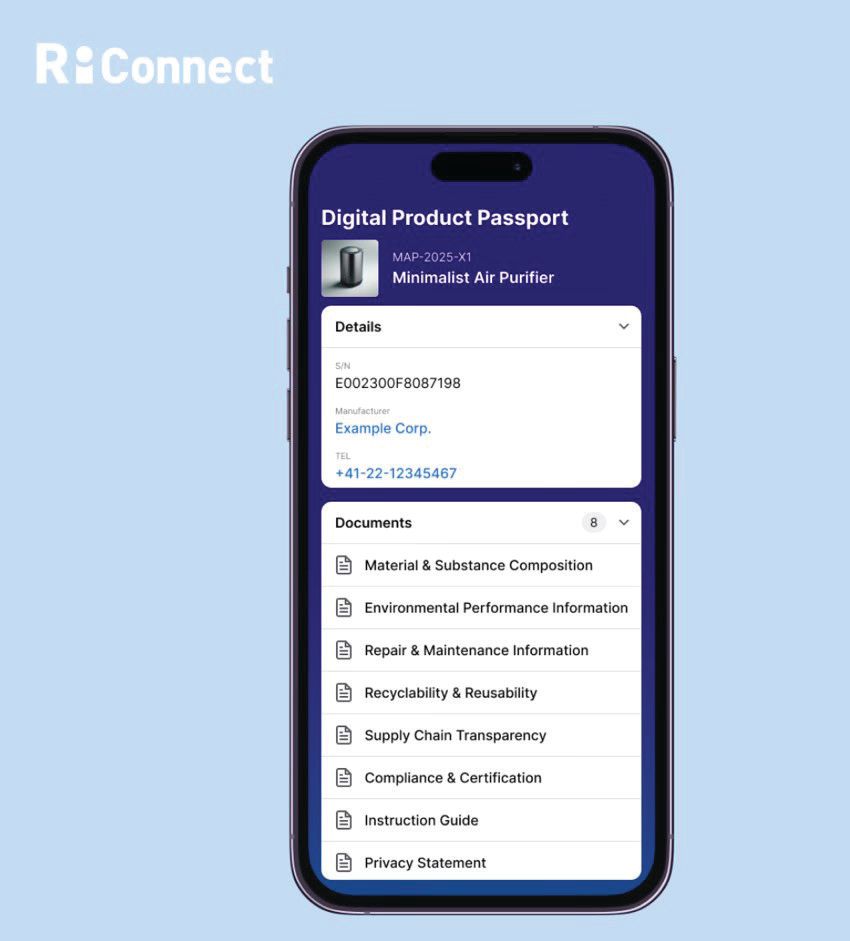
A DPP is a data management tool that records a product’s lifecycle information, including material composition, energy performance, maintenance guidelines, and recycling methods. A DPP promotes compliance and transparency, while improving resource efficiency and supporting circular economy goals.
Rob Whitehurst-Maiden, sales manager at RiConnect UK Limited, said: “We fully support the move to ESPR. It provides a critical legal framework for global digitalization and sustainability, perfectly aligning with RiConnect’s DPP functionality. We believe this is not only a regulatory requirement but also a significant opportunity to drive industry transparency and enhance resource efficiency.
RiConnect is committed to transforming compliance demands into business value, helping companies remain competitive in an ever-changing market.”
RiConnect’s DPP is based on four pillars:
- Assignment: each product’s DPP is tied to a unique identifier and automatically generated via RFID technology.
- Update: DPP data is fixed upon generation, ensuring compliance by preventing manufacturers from altering product data post-sale.
- Use: end users can access product information by reading RFID tags with a smartphone, without additional applications.
- Disposal: the DPP provides clear recycling and reuse guidelines to maximize resource utilization.
The strategy enabled the company to lead customers on conformity with other global regulations, such as the U.S.’s Resource Conservation and Recovery Act (RCRA), focusing on waste management and resource efficiency; and Japan’s Basic Law for Establishing a Recycling- Based Society, which emphasizes recycling and reuse.
ESPR compliance is another example of the versatility of the RiConnect Compliance Management System that can be applied across a myriad of products and applications, upheld by the CTSN — compliance, traceability, status, net zero — concept.